
For release: Wednesday 21 October 2026
AI-written LinkedIn posts get about a quarter fewer reactions, study finds
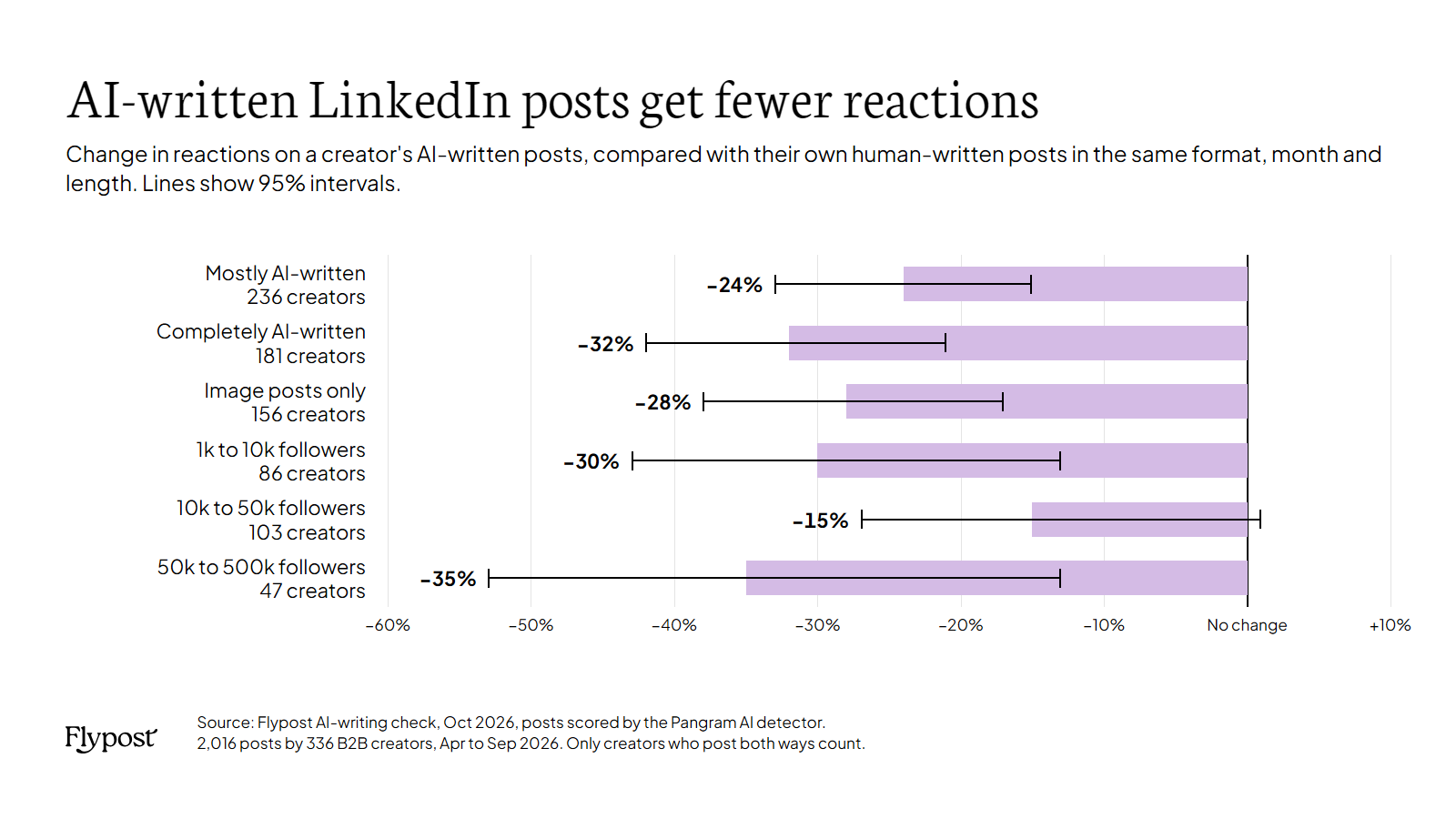
More than half of LinkedIn posts are now mostly written by AI, a detector check of 2,016 posts found. The same person's AI-written posts earned about 24% fewer reactions and 12% fewer comments than their own writing.
21 October 2026: LinkedIn posts written mostly by AI earn about a quarter fewer reactions than posts the same person wrote themselves, a study that ran 2,016 recent posts through an AI detector has found.
The study, by LinkedIn content studio Flypost, ran one post a month from April to September 2026 for each of 336 B2B creators through Pangram, a dedicated AI-text detector, then compared each person's AI-written posts with the ones they wrote themselves. Flypost sells AI-assisted LinkedIn writing software.
Key findings
- AI posts get fewer reactions. Mostly AI-written posts earned about 24% fewer reactions than the same person's human-written posts, in the same format, month and length, across 236 creators who post both ways.
- The more AI, the bigger the drop. Posts with no human writing detected at all earned about 32% fewer reactions.
- Comments fall too. Mostly AI-written posts drew about 12% fewer comments.
- Big and small accounts alike. About 30% fewer reactions for accounts with 1,000 to 10,000 followers and about 35% fewer above 50,000. The middle band, 10,000 to 50,000, showed a smaller gap of about 15%.
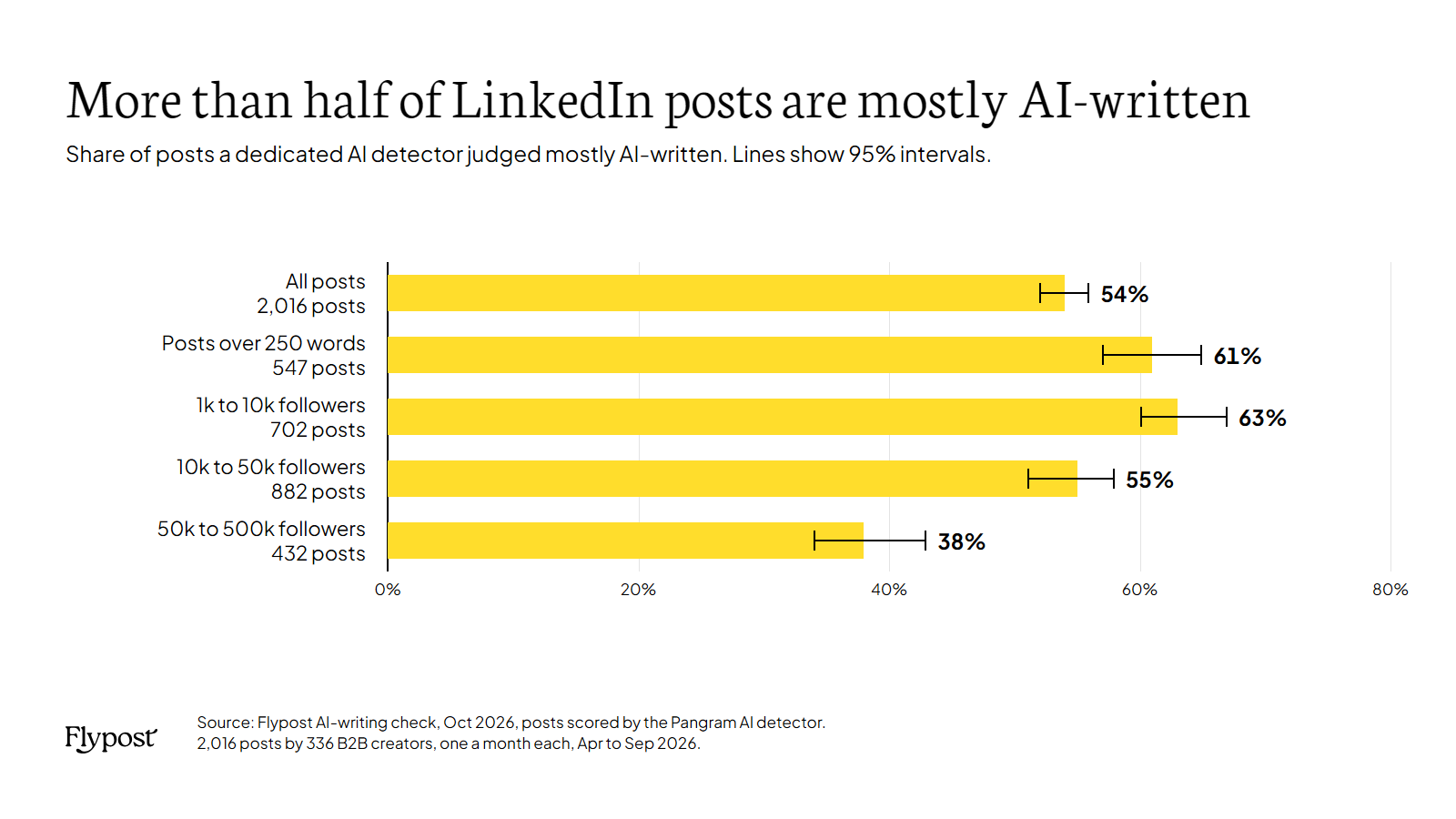
- AI is now the majority. 54% of the posts were mostly written by AI, and a third had no human writing detected at all.
“We make AI writing tools, so this isn't the answer we wanted. But the data is clear: when AI writes the whole post, people react less. Use it to sharpen what you wrote, not to write it for you.”
Story angles
One study, three versions of the release for different beats. The facts are identical in all three; only the lead and the order of the findings change.
Version A: Marketing and LinkedIn tactics writers
AI-written LinkedIn posts get about a quarter fewer reactions, study finds
The same person's AI-written posts earn about a quarter fewer reactions than their own writing, and completely AI-written posts do worse still.
Release A (PDF)Version B: AI and technology reporters
More than half of LinkedIn posts are now mostly written by AI, study finds
54% of posts are mostly AI-written, smaller accounts use it most, only 12% of creators never do, and the share held steady for six months.
Release B (PDF)Version C: Algorithm and platform reporters
AI-written posts get a quarter fewer reactions as LinkedIn targets “AI slop”, study finds
As LinkedIn ramps up classifiers to catch AI slop, the same person's AI-written posts earn about a quarter fewer reactions, and AI use hasn't fallen since the slop button arrived.
Release C (PDF)
Findings
How AI-written posts perform
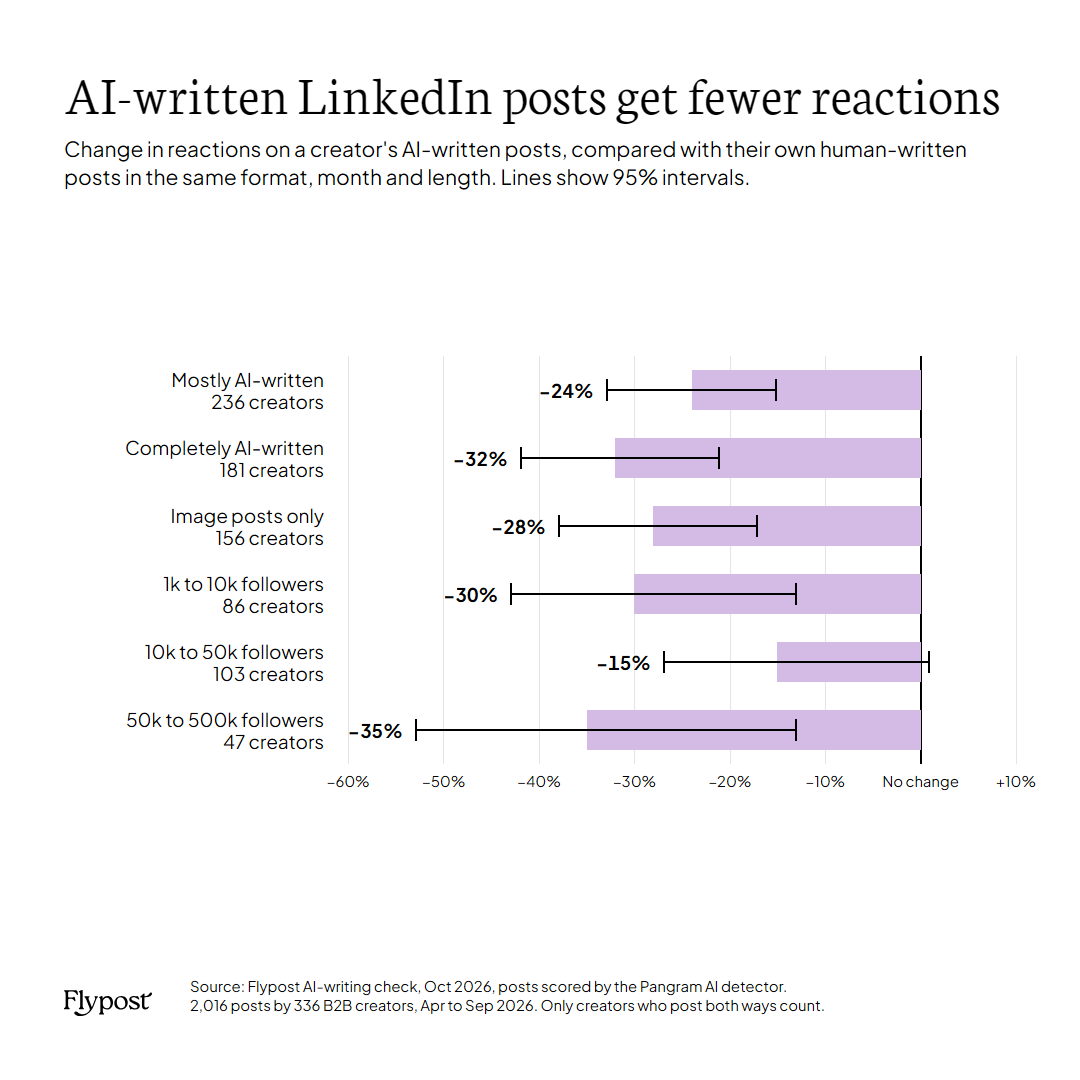
Each creator's AI-written posts compared with their own human-written posts, in the same format, month and length; 95% interval; creators who post both ways.
| Comparison | Effect | Interval | Creators |
|---|---|---|---|
| Reactions: mostly AI-written | −24% | −33% to −15% | 236 |
| Reactions: completely AI-written | −32% | −42% to −21% | 181 |
| Comments: mostly AI-written | −12% | −21% to −2% | 236 |
| Reactions: image posts only | −28% | −38% to −17% | 156 |
| Reactions: text-only posts (too few to call) | −15% | −38% to +13% | 29 |
| Reactions: 1,000–10,000 followers | −30% | −43% to −13% | 86 |
| Reactions: 10,000–50,000 followers | −15% | −27% to +1% | 103 |
| Reactions: 50,000–500,000 followers | −35% | −53% to −13% | 47 |
How much of LinkedIn is AI-written
Share of posts judged mostly AI-written; 95% interval; posts checked.
| Posts | Mostly AI-written | Interval | Posts checked |
|---|---|---|---|
| All posts | 54% | 52% to 56% | 2,016 |
| Posts over 250 words | 61% | 57% to 65% | 547 |
| 1,000–10,000 followers | 63% | 60% to 67% | 702 |
| 10,000–50,000 followers | 55% | 51% to 58% | 882 |
| 50,000–500,000 followers | 38% | 34% to 43% | 432 |
About the study
Flypost ran 2,016 original LinkedIn posts through Pangram (model pangram-4), a dedicated AI-text detector: one randomly chosen post a month, April to September 2026, from each of 336 English-speaking B2B creators (1,000 to 500,000 followers), picked at random from the 948 in its LinkedIn study who posted every month. Posts are public and were collected through a third-party data provider. A post counts as mostly AI-written when Pangram judged more than half of its text AI-generated or AI-assisted, and completely AI-written when it found no human writing at all. The engagement figures compare each creator's AI-written posts with their own human-written posts, holding format, month and length steady, with 95% intervals from resampling creators. They measure reactions and comments, not views, and cannot rule out that people use AI for posts that would have done worse anyway. No detector is perfect; an August 2025 University of Chicago working paper found Pangram the most accurate of four it tested. Flypost paid about $250 in detector fees, and the study was not independently reviewed. Full method, limits and charts: flypost.io/learn/ai-generated-linkedin-posts-study
What LinkedIn has said, and other published research
- The Next Web, LinkedIn's “Seems like AI slop” button and new classifiers (30 July 2026)
- Engadget, LinkedIn reports 40% fewer views on posts it classifies as AI slop (21 August 2026)
- The Decoder, Pangram's scan of 1 million+ posts across five platforms (12 July 2026)
- University of Chicago Booth, Artificial Writing and Automated Detection (working paper, August 2025)
Downloads
Charts and data
- Hero chart: reactions on AI-written posts
PNG, 1600 x 900, 93 KB
- Hero chart, square
PNG, 1080 x 1080, 79 KB
- Chart: how much of LinkedIn is AI-written
PNG, 1600 x 900, 81 KB
- Engagement data
CSV, 1 KB
- How-common data
CSV, 1 KB
Press releases
- Release A: AI posts get fewer reactions
PDF, A4, 60 KB
- Release B: Half of LinkedIn is AI-written
PDF, A4, 59 KB
- Release C: LinkedIn's slop crackdown
PDF, A4, 61 KB
Headshot
- Sam Cassman, founder, headshot
JPG, 1024 x 1024, white background, 150 KB
- Sam Cassman, founder, headshot (transparent)
PNG, 1024 x 1024, transparent background, 545 KB


Logos
- Flypost brandmark (F)
PNG, 512 x 512, white background, 11 KB
- Flypost brandmark (F), transparent
PNG, 512 x 512, transparent background, 11 KB
- Flypost wordmark
SVG, scales to any size, 3 KB


Product screenshots
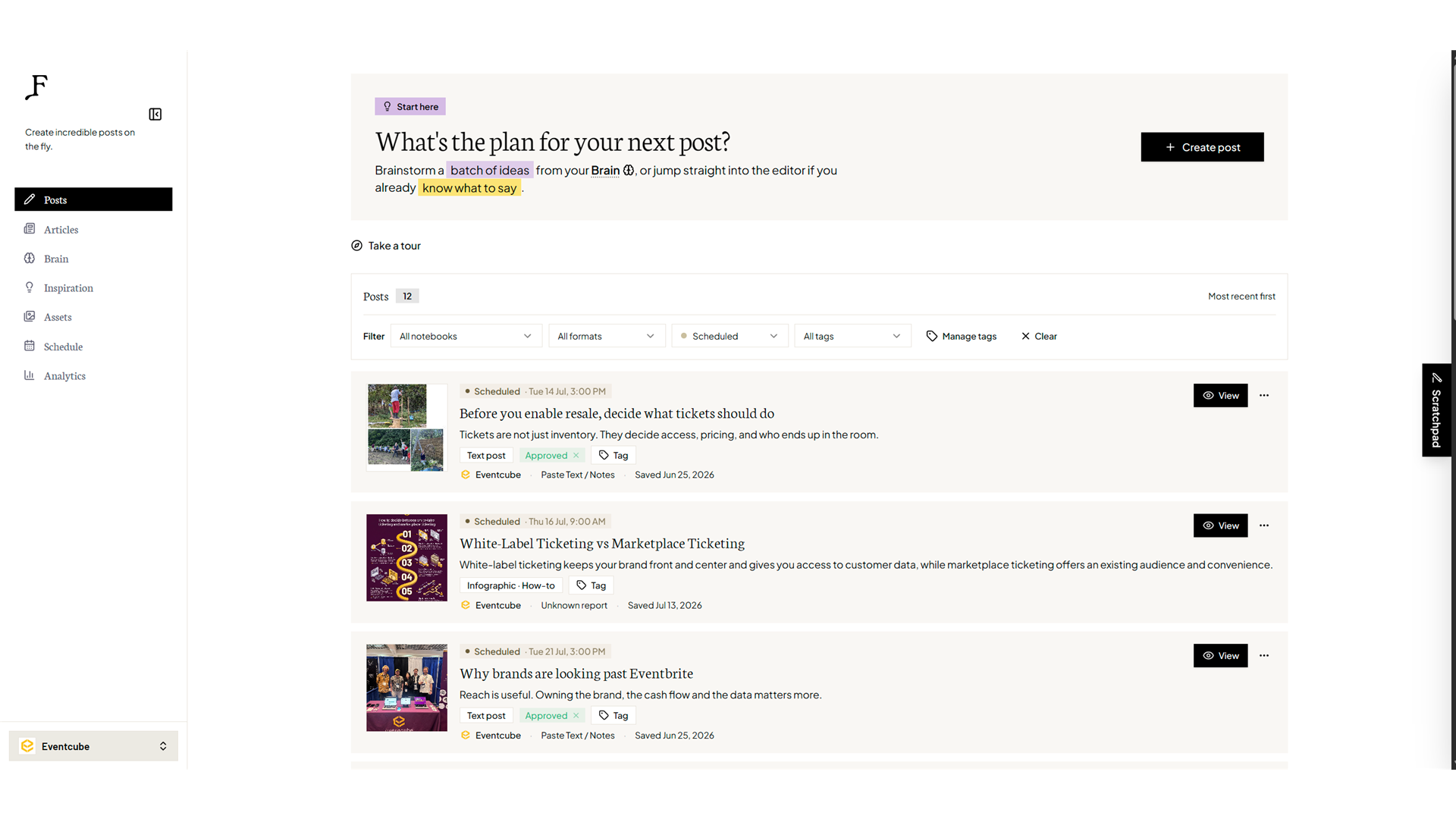
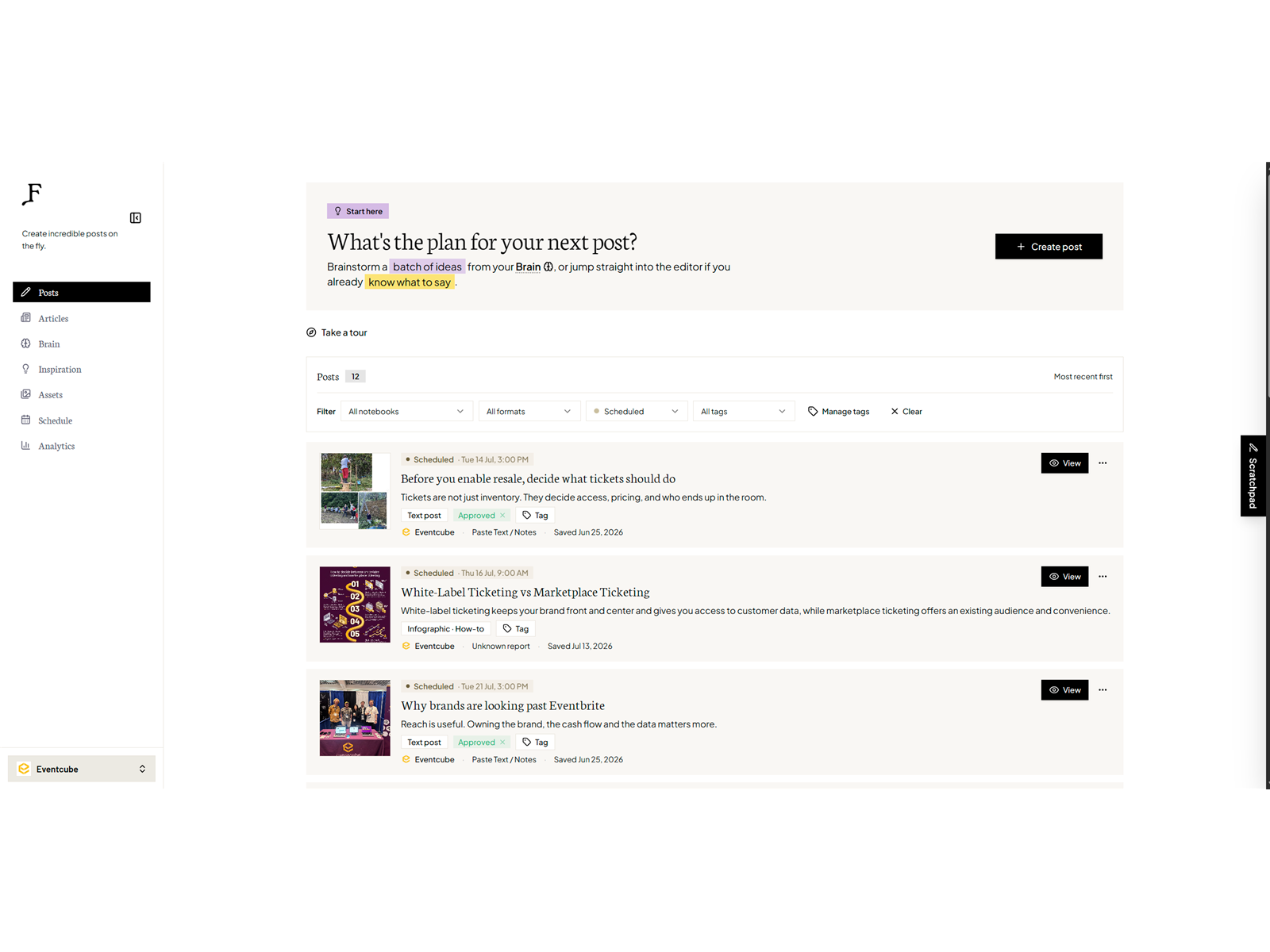
- Posts home screenshot, widescreen
PNG, 1920 x 1080, 393 KB
- Posts home screenshot, 4:3
PNG, 1600 x 1200, 302 KB
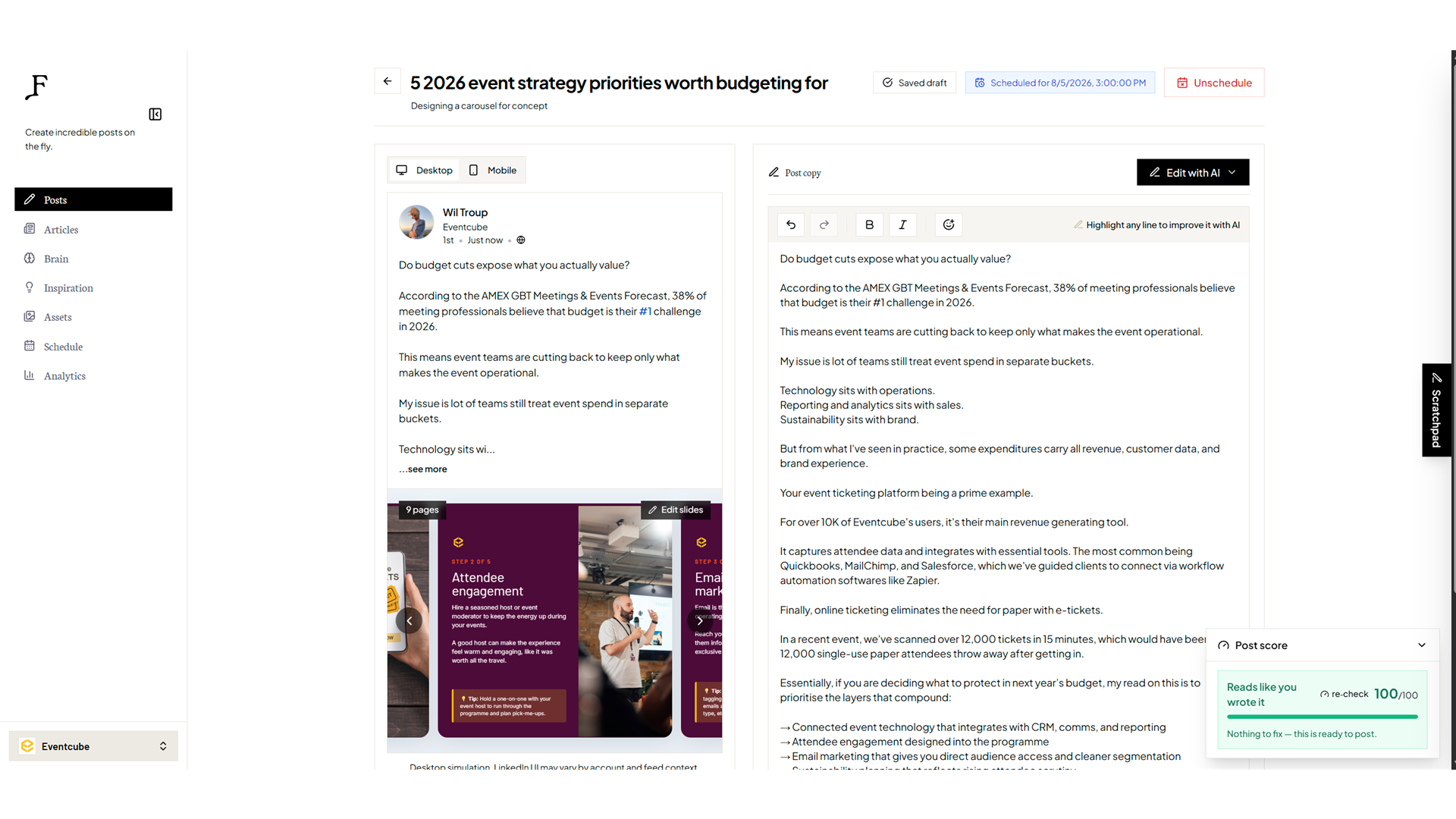
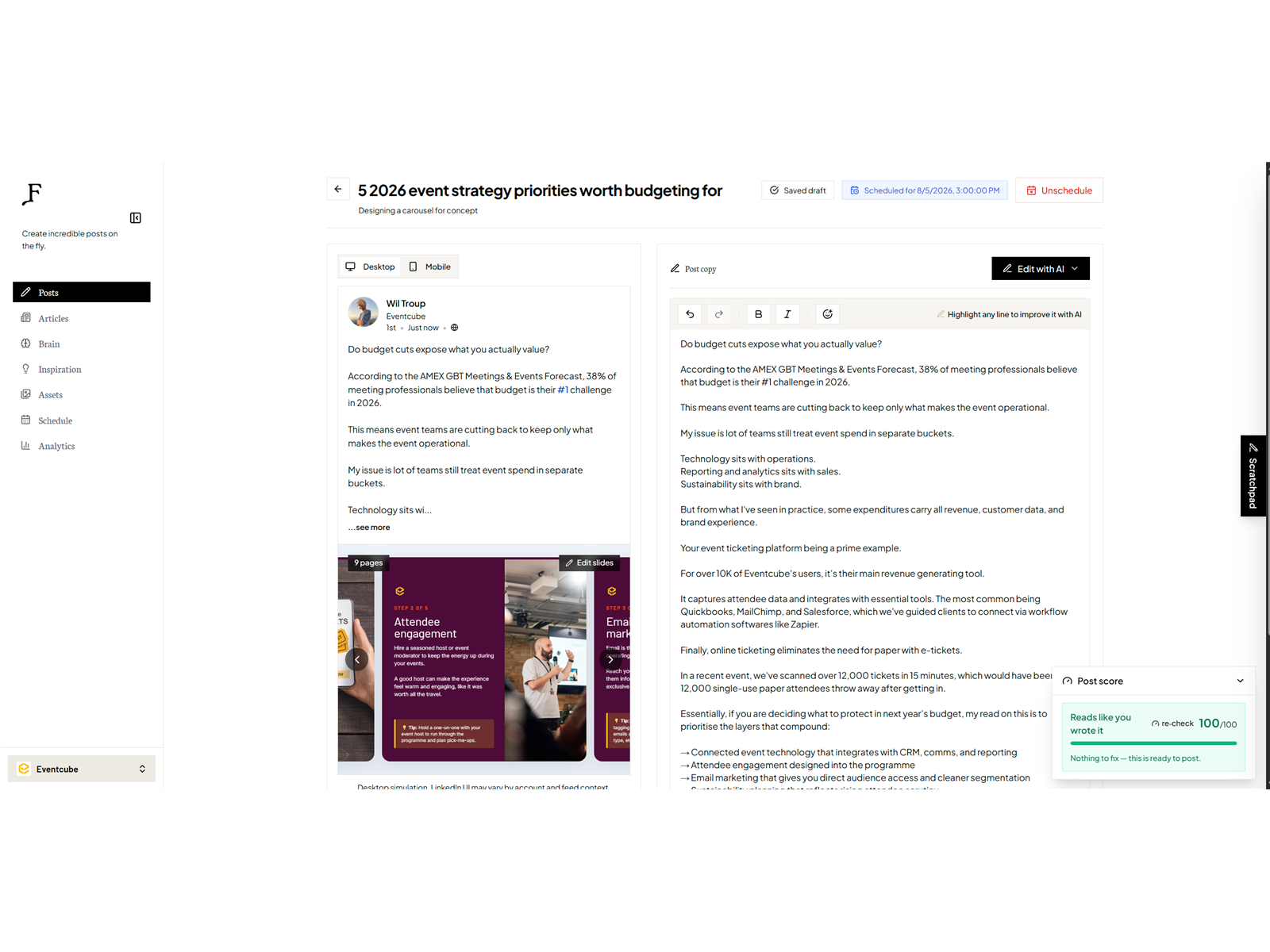
- Post editor screenshot, widescreen
PNG, 1920 x 1080, 623 KB
- Post editor screenshot, 4:3
PNG, 1600 x 1200, 475 KB
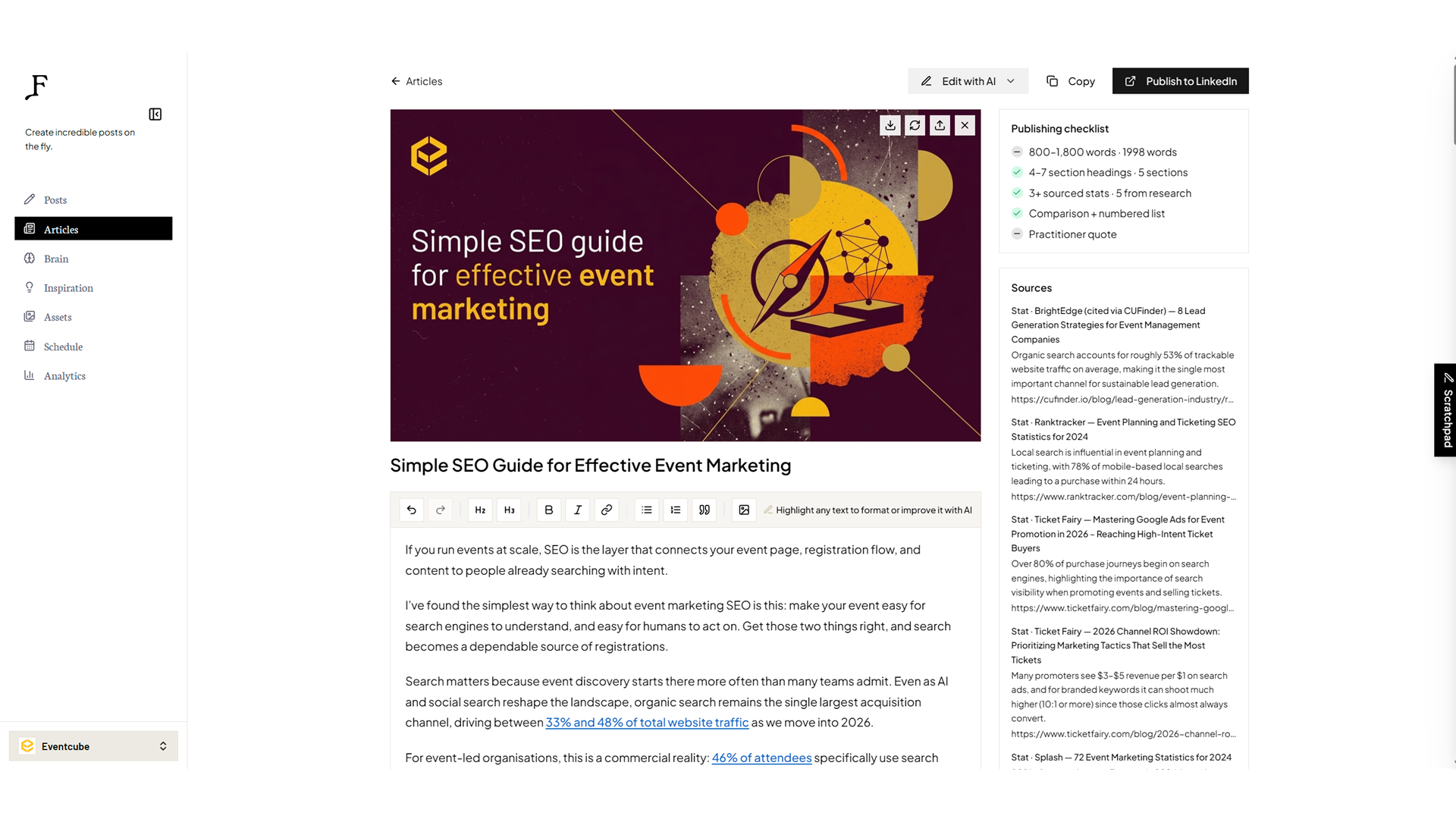
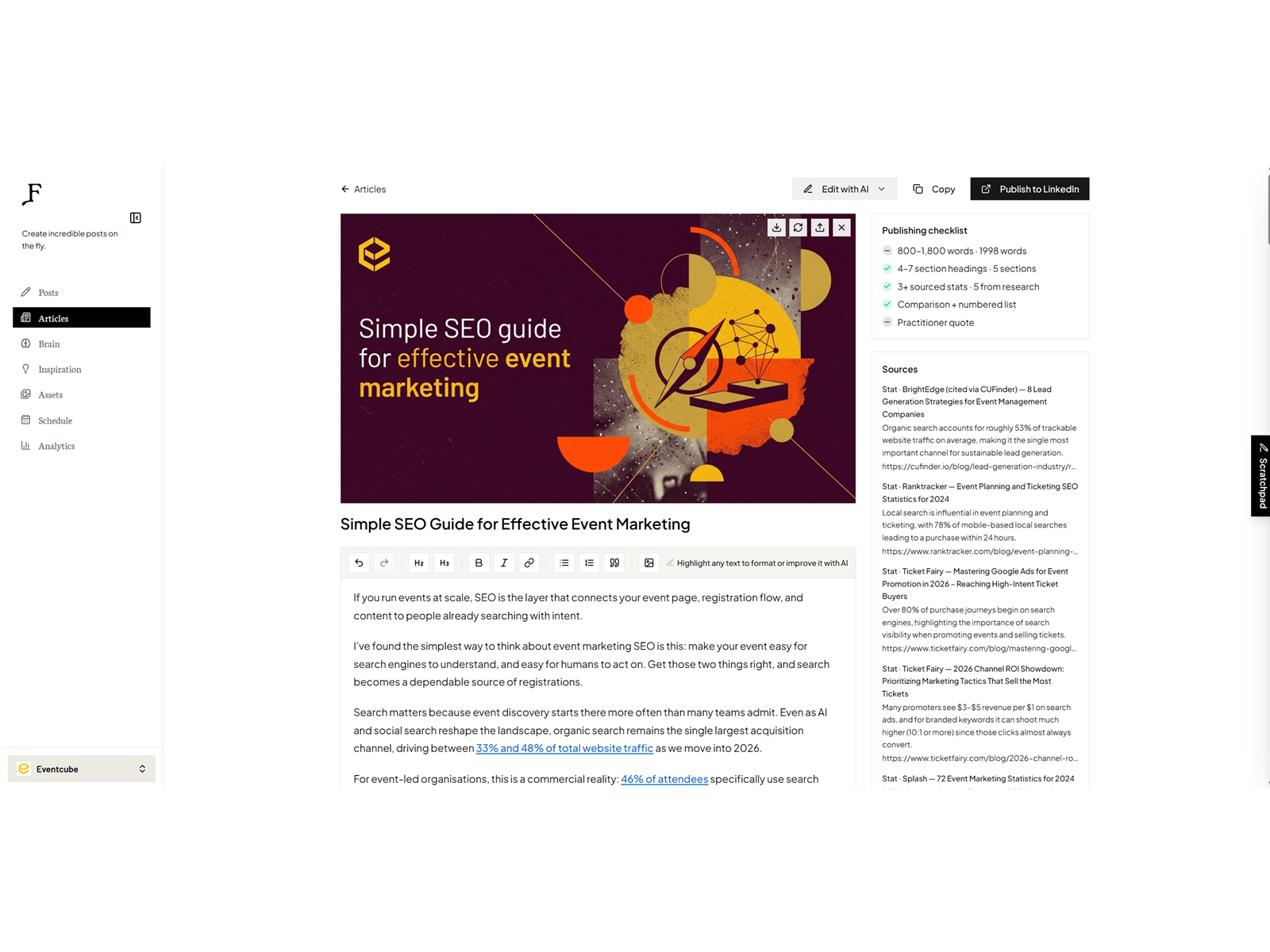
- Article editor screenshot, widescreen
PNG, 1920 x 1080, 889 KB
- Article editor screenshot, 4:3
PNG, 1600 x 1200, 645 KB
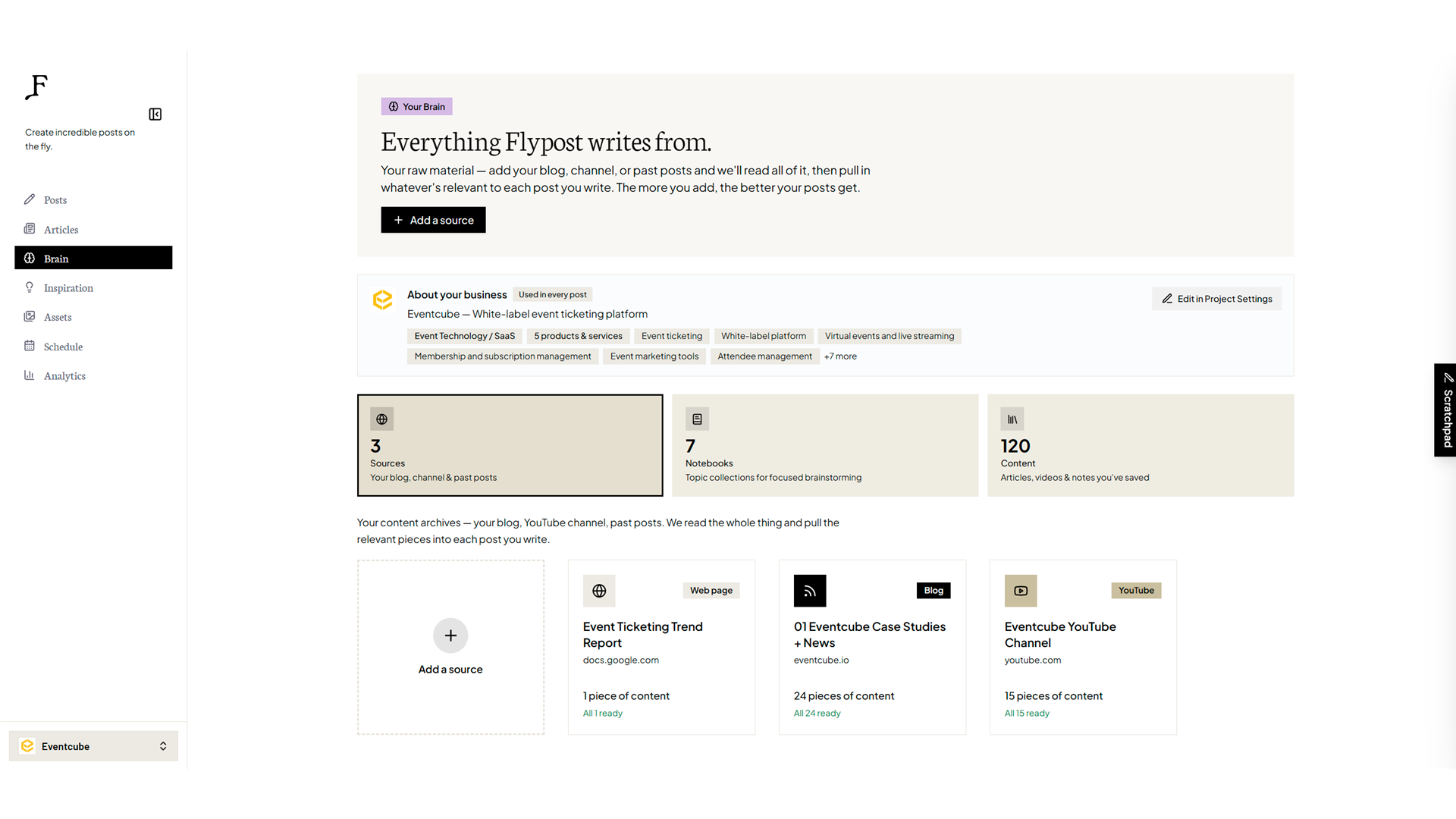
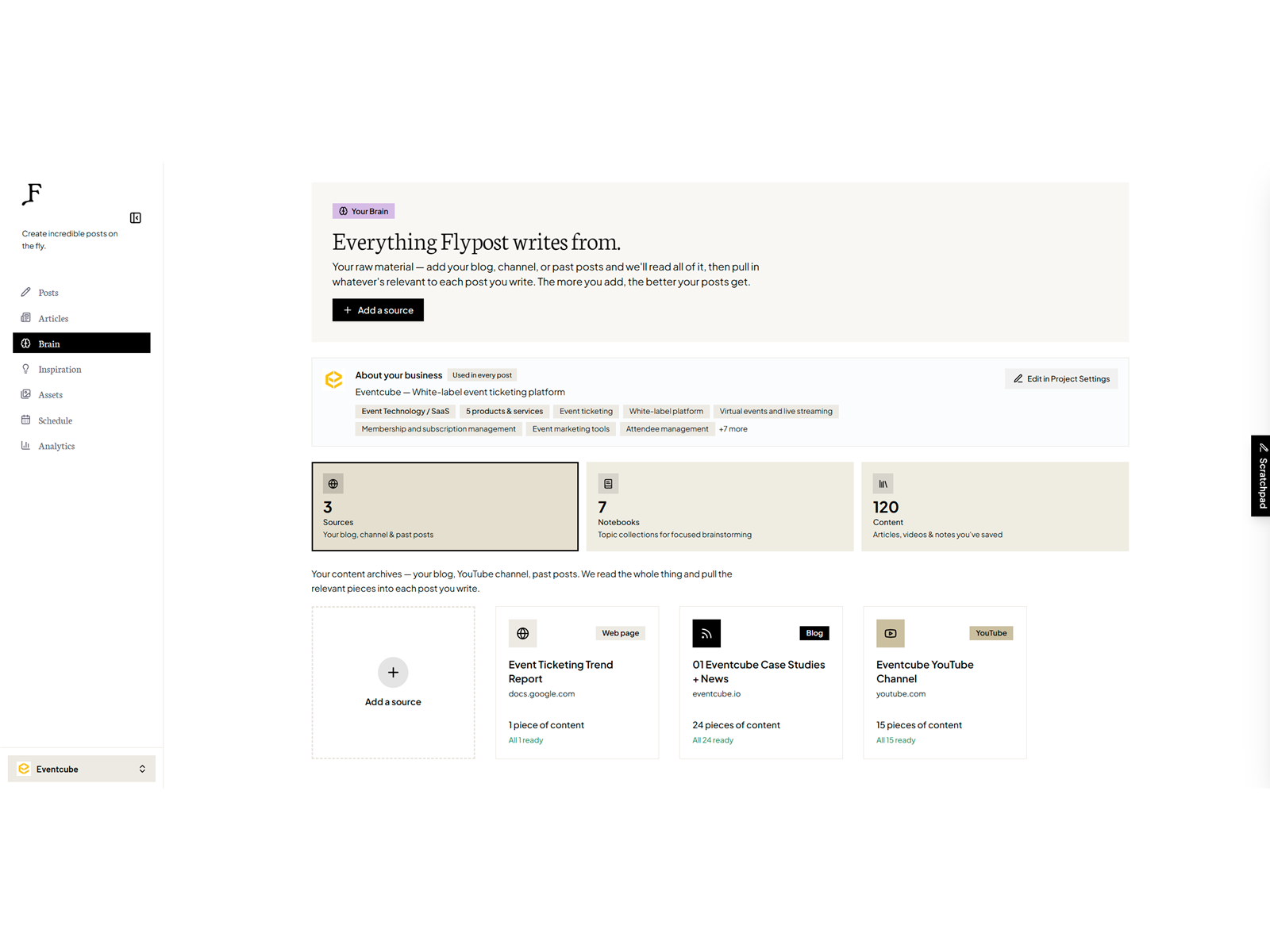
- Brain (source material) screenshot, widescreen
PNG, 1920 x 1080, 279 KB
- Brain (source material) screenshot, 4:3
PNG, 1600 x 1200, 222 KB
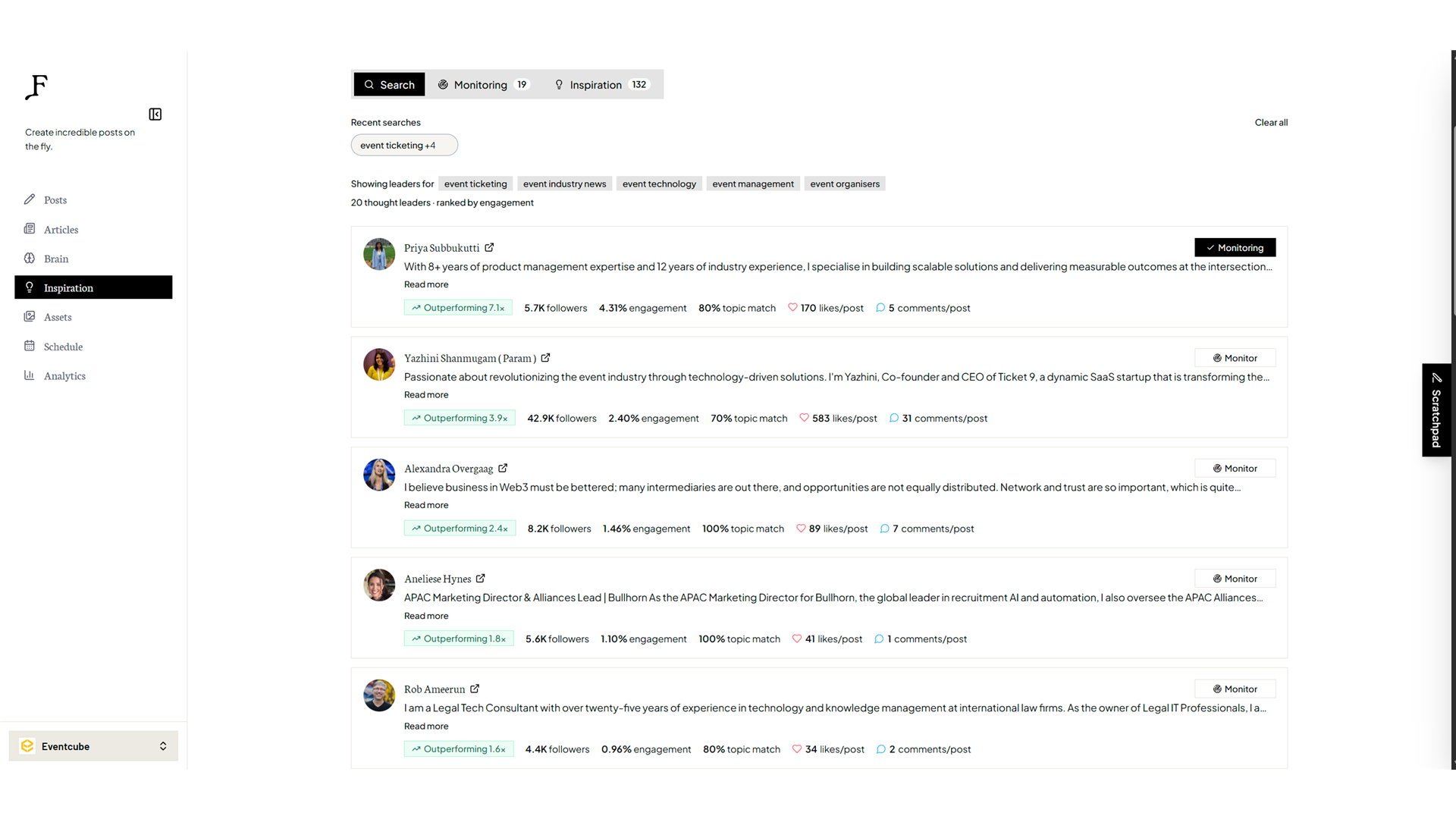
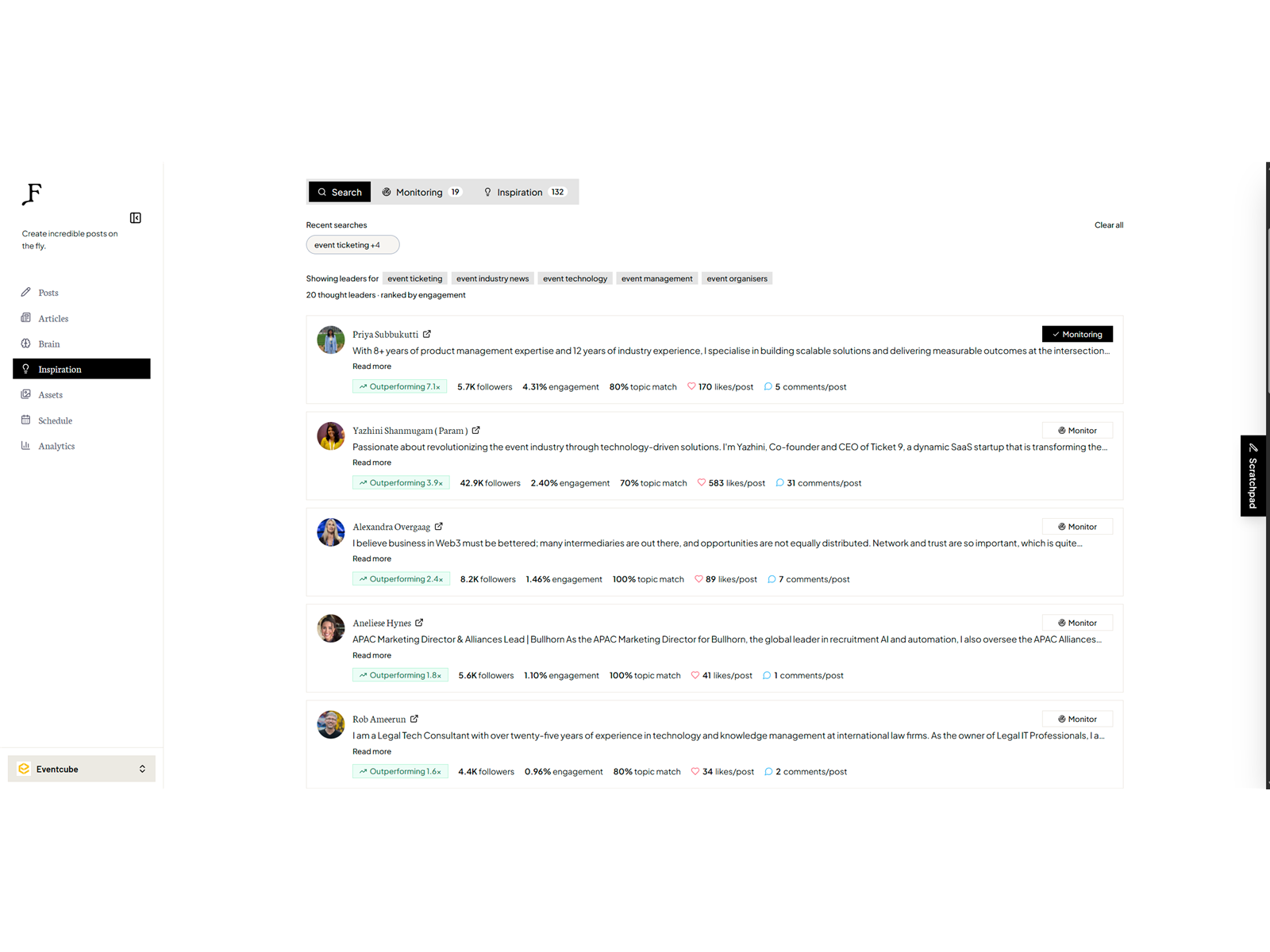
- Inspiration feed screenshot, widescreen
PNG, 1920 x 1080, 367 KB
- Inspiration feed screenshot, 4:3
PNG, 1600 x 1200, 285 KB
Media contact
Sam Cassman, founder, Flypost
Available for interview.
- Email: [email protected]
- Phone: available to journalists on request
About Flypost
Flypost is a LinkedIn content studio that turns a company's own material (posts, transcripts, case studies) into LinkedIn posts, carousels and articles. flypost.io
Read the full study: method, limits and charts