For release: Tuesday 13 October 2026
What actually works on LinkedIn? Study of 116,000 posts finds three things
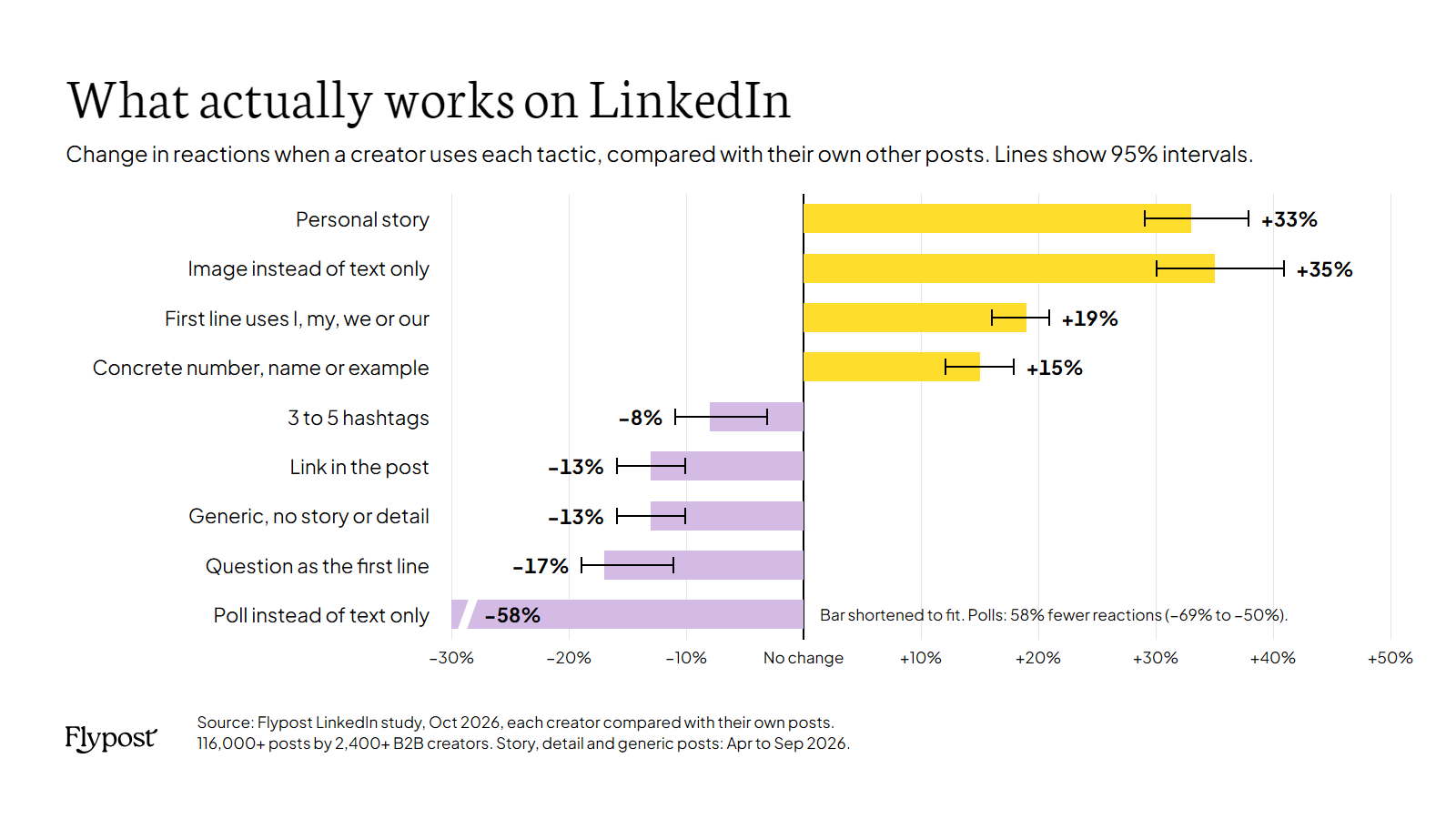
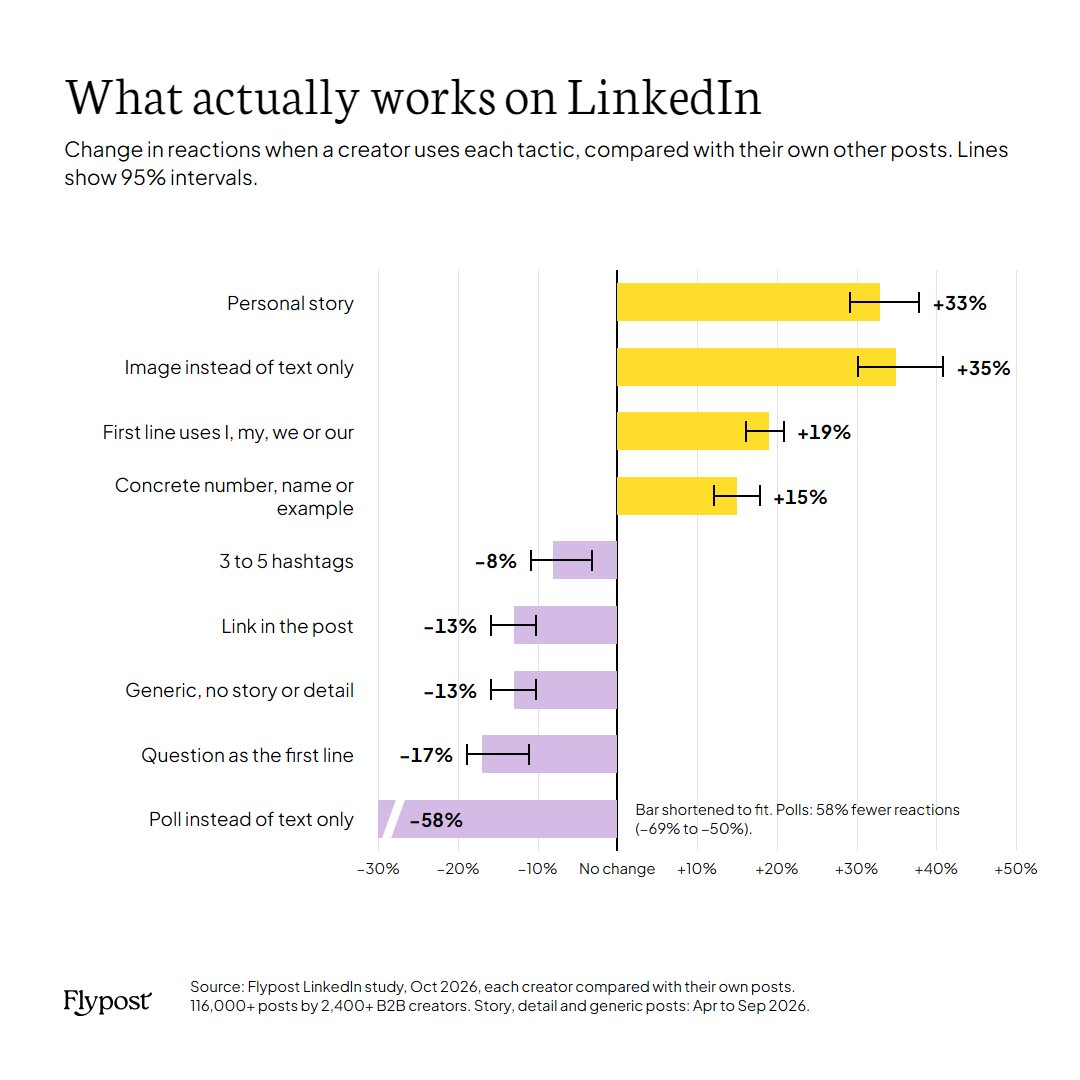
Personal stories earn about a third more reactions, images about 35% more, and first lines written as "I" or "we" about 19% more. Most of the usual advice, from hashtags to question openers, doesn't help.
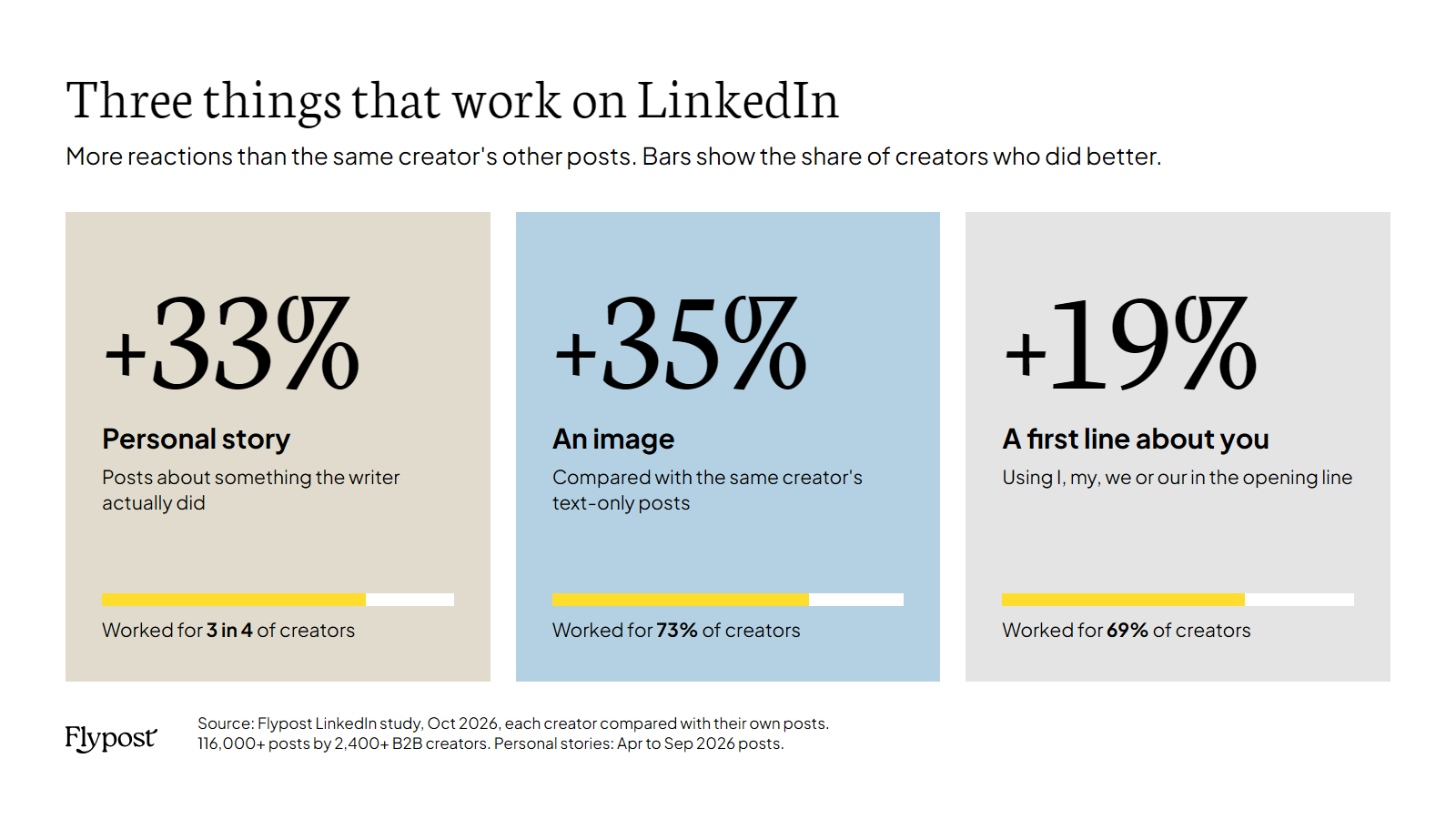
13 October 2026: Three things reliably lift a LinkedIn post's reactions: telling a personal story (about a third more), adding an image (about 35% more) and writing the first line about yourself (about 19% more), a study of more than 116,000 posts has found.
The study, by LinkedIn content studio Flypost, compared the posts of 2,400+ B2B creators with each creator's own other posts, so the results show what a tactic does rather than who tends to use it. It was first run in July 2026 and repeated in October on the latest 12 months of posts. Flypost sells LinkedIn content software.
Key findings
- Personal stories win. Posts about something the writer actually did earned about a third more reactions than the same person's other posts, for 3 in 4 creators. Posts with a concrete number, name or example earned about 15% more.
- Images still win. About 35% more reactions than the same person's text posts, for 73% of creators.
- Write the first line about yourself. First lines using "I", "my", "we" or "our" earned about 19% more; openers built on "you" cost about 10%.
- Most of the usual advice doesn't help. Opening with a question cost about 17%; hashtags gained nothing, and three or more cost about 7%; weekend vs midweek made no meaningful difference.
- Post more, judge by the week. For accounts under 10,000 followers, four or more posts a week brought about 42 reactions a week, against 12 for under 1.5.
“Most LinkedIn advice is somebody's hunch repeated until it sounds like a rule. Tested properly, the thing that keeps winning is telling people what actually happened to you.”
Story angles
One study, four versions of the release for different beats. The facts are identical in all four; only the lead and the order of the findings change.
Version A: AI slop and authenticity reporters
Posts with a real human story get a third more reactions on LinkedIn, study finds
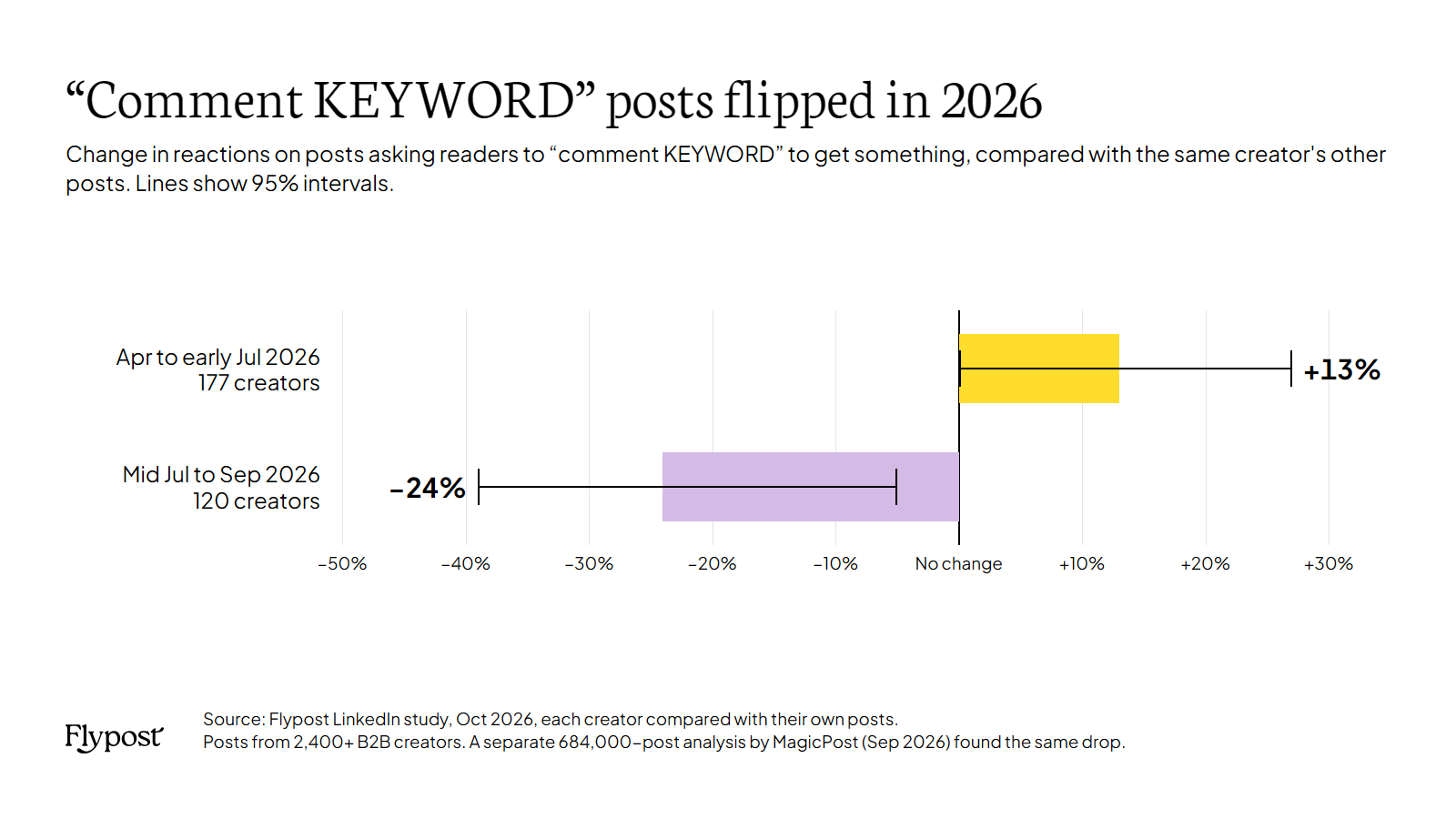
Posts about something the writer really did beat generic content by a wide margin, and "comment KEYWORD" bait has turned from a 13% gain into a 24% loss since July.
Release A (PDF)Version B: Careers and LinkedIn-culture reporters
LinkedIn's "cringe" personal posts actually work, study of 116,000 posts finds
The personal posts people love to mock earn about a third more reactions, and writing about yourself beats telling the reader what to do.
Release B (PDF)Version C: Algorithm and platform reporters
What works on LinkedIn after the 2026 feed changes: study of 116,000 posts
Since this year's feed changes, engagement bait has flipped to a loss, personal stories keep winning, and a link costs about 13% of reactions rather than the 60% often quoted.
Release C (PDF)Version D: Marketing tactics writers
What actually works on LinkedIn? Study of 116,000 posts finds three things
Three things reliably lift reactions (personal stories, images and first lines about yourself), while most of the usual advice, from hashtags to question openers, doesn't help.
Release D (PDF)
Findings
Each creator compared with their own posts; 95% interval; share of creators who did better.
| Tactic | Effect on reactions | Interval | Creators | Did better |
|---|---|---|---|---|
| Personal story (Apr–Sep 2026) | +33% | +29% to +38% | 1,549 | 75% |
| Image vs text-only | +35% | +30% to +41% | 1,047 | 73% |
| "I/my/we/our" in first line | +19% | +16% to +21% | 1,734 | 69% |
| Concrete detail (Apr–Sep 2026) | +15% | +12% to +18% | 1,000 | 62% |
| Generic, no story or detail (Apr–Sep 2026) | −13% | −16% to −10% | 955 | 37% |
| "You/your" in first line | −10% | −12% to −8% | 1,382 | 35% |
| 1–2 hashtags | no change | −3% to +4% | 907 | 51% |
| 3–5 hashtags | −8% | −11% to −3% | 971 | 44% |
| Question as first line | −17% | −19% to −11% | 685 | 31% |
| Link in a normal post | −13% | −16% to −10% | 1,366 | 40% |
| Weekend vs weekday | +3% | 0% to +6% | 1,211 | 54% |
| "Comment KEYWORD", Apr to early Jul 2026 | +13% | 0% to +27% | 177 | 58% |
| "Comment KEYWORD", mid Jul to Sep 2026 | −24% | −39% to −5% | 120 | 36% |
| Poll vs text-only | −58% | −69% to −50% | 47 | 9% |
About the study
Flypost analysed 116,000+ original LinkedIn posts published between October 2025 and September 2026 by 2,400+ English-speaking B2B creators (1,000 to 500,000 followers), drawn from 2,500 tracked across the US, UK, Canada, Australia, Europe and elsewhere. Posts are public and were collected through a third-party data provider. Each finding compares a creator's posts that used a tactic with their own posts that didn't, and measures reactions and comments, not impressions. Posts were labelled as personal stories by an AI model (Gemini 3.7 Flash) for April to September 2026; a hand check of 30 randomly chosen posts agreed with 26. The study was not independently reviewed. Full method, limits and charts: flypost.io/learn/linkedin-algorithm-study-data
Published advice and estimates we compared against
- Sprout Social, LinkedIn hashtag guide ("three to five hashtags per post", May 2026)
- Hootsuite, LinkedIn hashtag guide
- Hootsuite, LinkedIn algorithm guide
- Buffer, best time to post on LinkedIn (July 2026)
- Forbes, the 60% link-penalty figure (30 July 2026)
- MagicPost, "comment KEYWORD" posts (30 September 2026)
Downloads
Charts and data
- Hero chart: what works
PNG, 1600 x 900, 91 KB
- Hero chart, square
PNG, 1080 x 1080, 79 KB
- Chart: three things that work
PNG, 1600 x 900, 118 KB
- Chart: “comment KEYWORD” flip
PNG, 1600 x 900, 78 KB
- Findings data
CSV, 1 KB
Press releases
- Release A: Human stories
PDF, A4, 59 KB
- Release B: Personal posts work
PDF, A4, 59 KB
- Release C: What the 2026 feed rewards
PDF, A4, 59 KB
- Release D: What actually works
PDF, A4, 60 KB
Headshot
- Sam Cassman, founder, headshot
JPG, 1024 x 1024, white background, 150 KB
- Sam Cassman, founder, headshot (transparent)
PNG, 1024 x 1024, transparent background, 545 KB


Logos
- Flypost brandmark (F)
PNG, 512 x 512, white background, 11 KB
- Flypost brandmark (F), transparent
PNG, 512 x 512, transparent background, 11 KB
- Flypost wordmark
SVG, scales to any size, 3 KB
Product screenshots
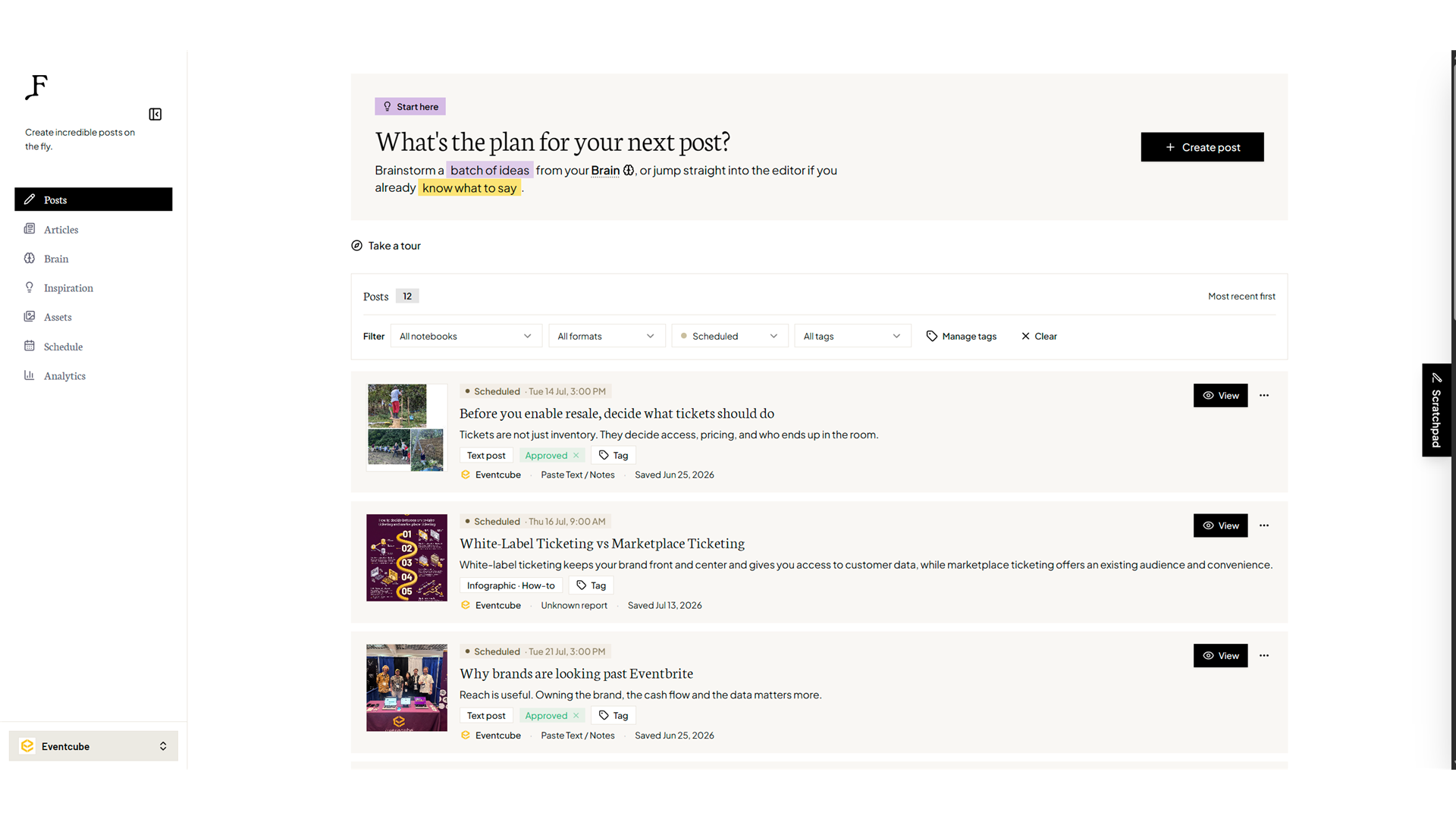
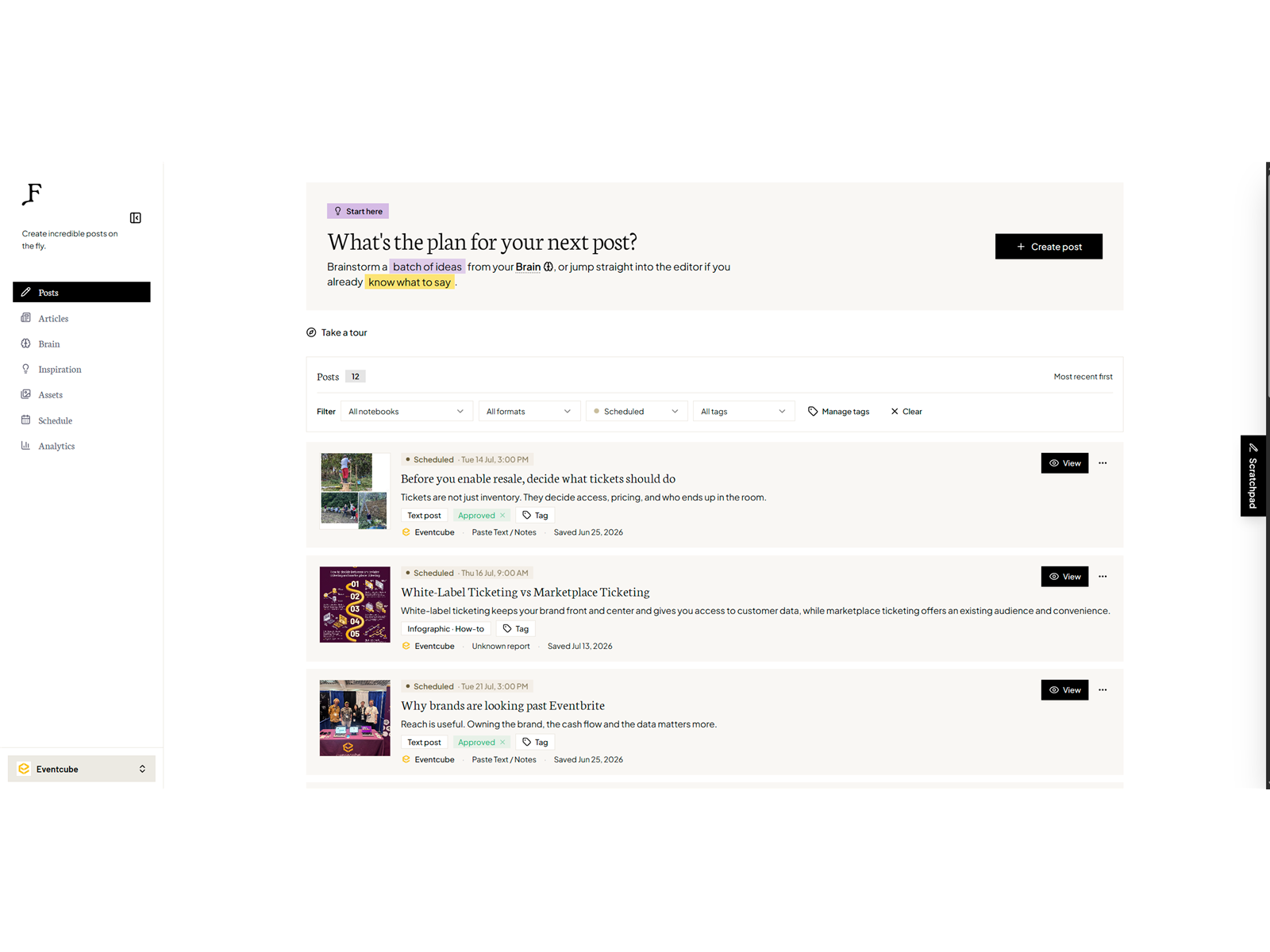
- Posts home screenshot, widescreen
PNG, 1920 x 1080, 393 KB
- Posts home screenshot, 4:3
PNG, 1600 x 1200, 302 KB
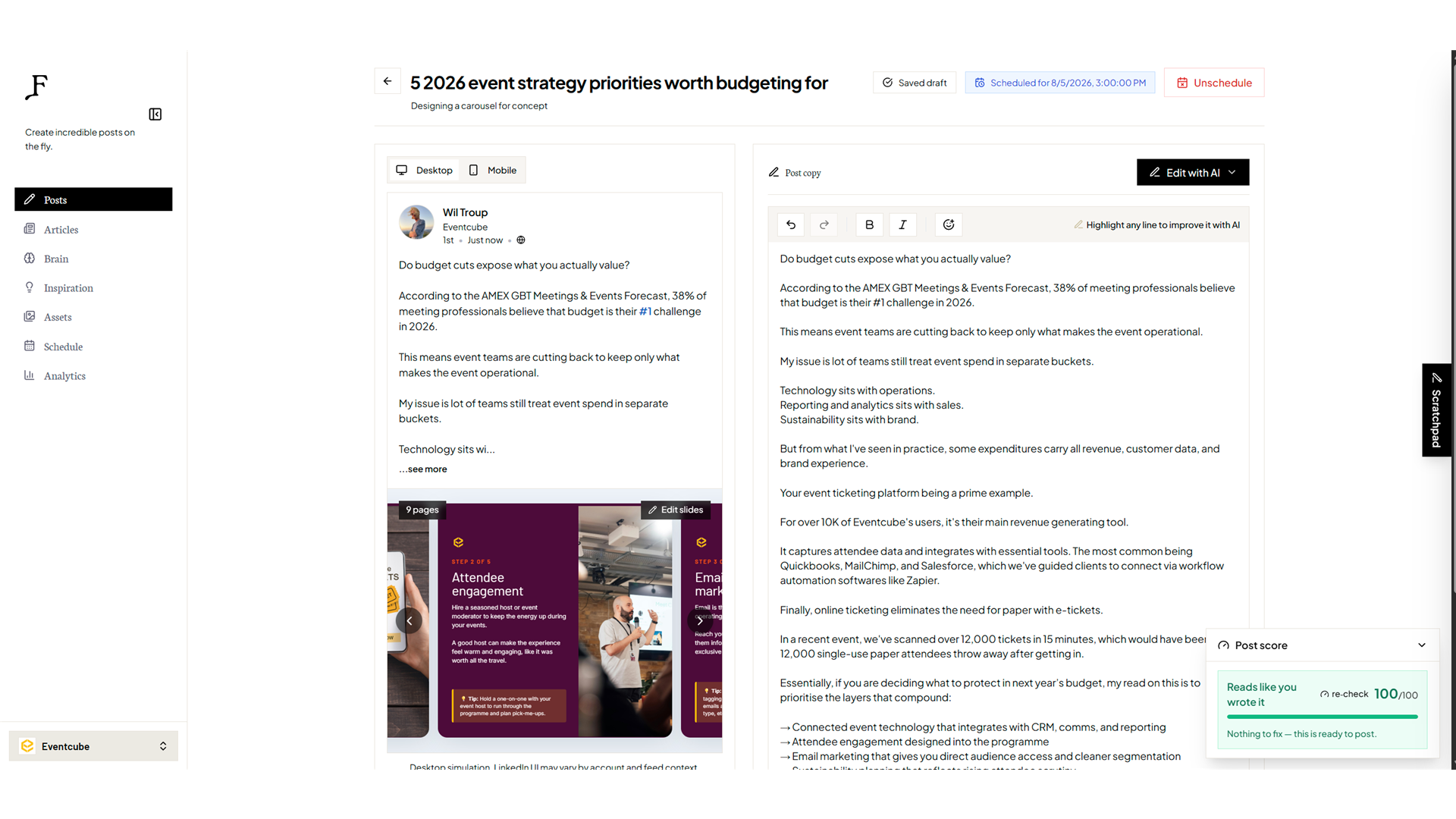
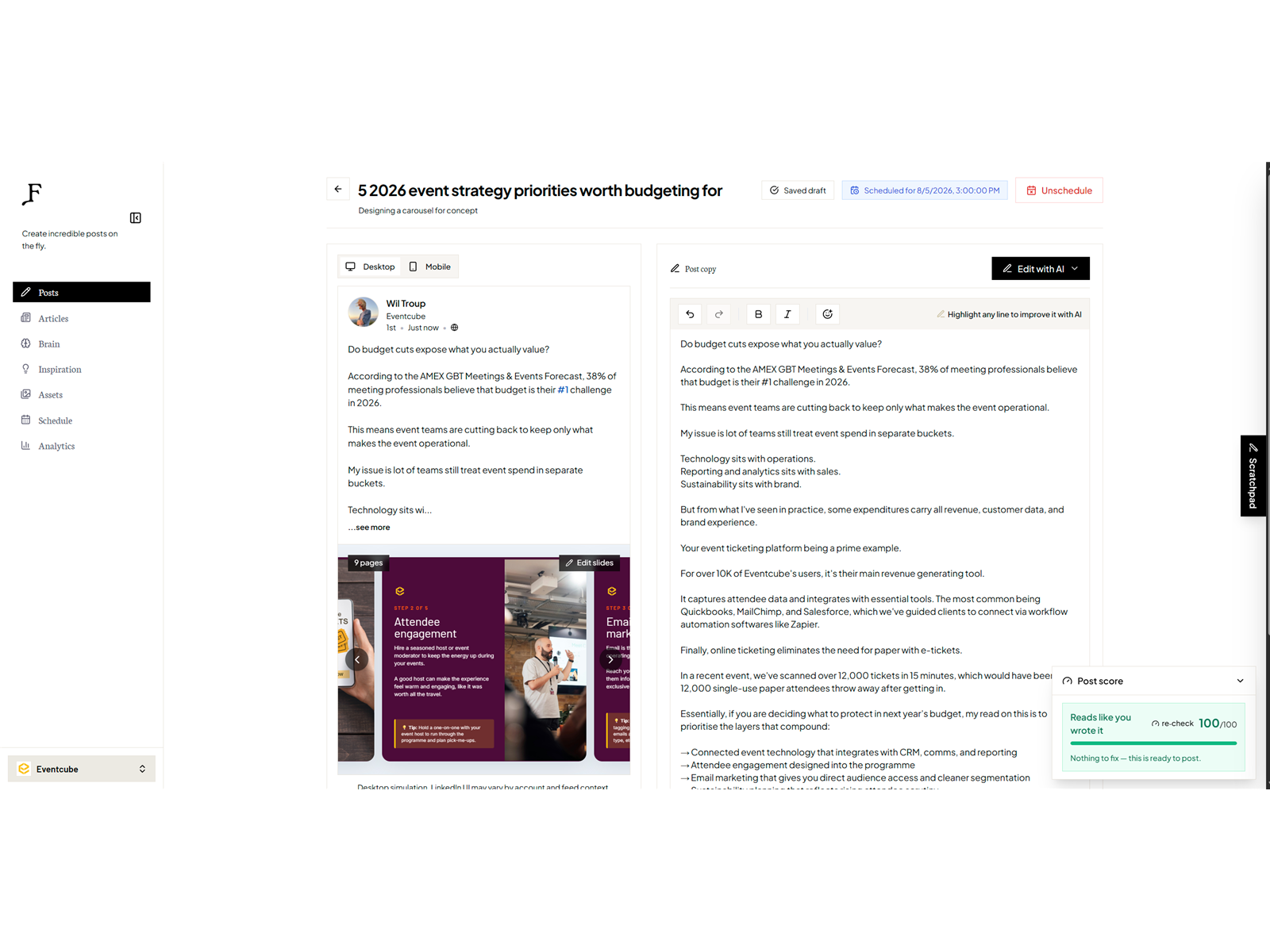
- Post editor screenshot, widescreen
PNG, 1920 x 1080, 623 KB
- Post editor screenshot, 4:3
PNG, 1600 x 1200, 475 KB
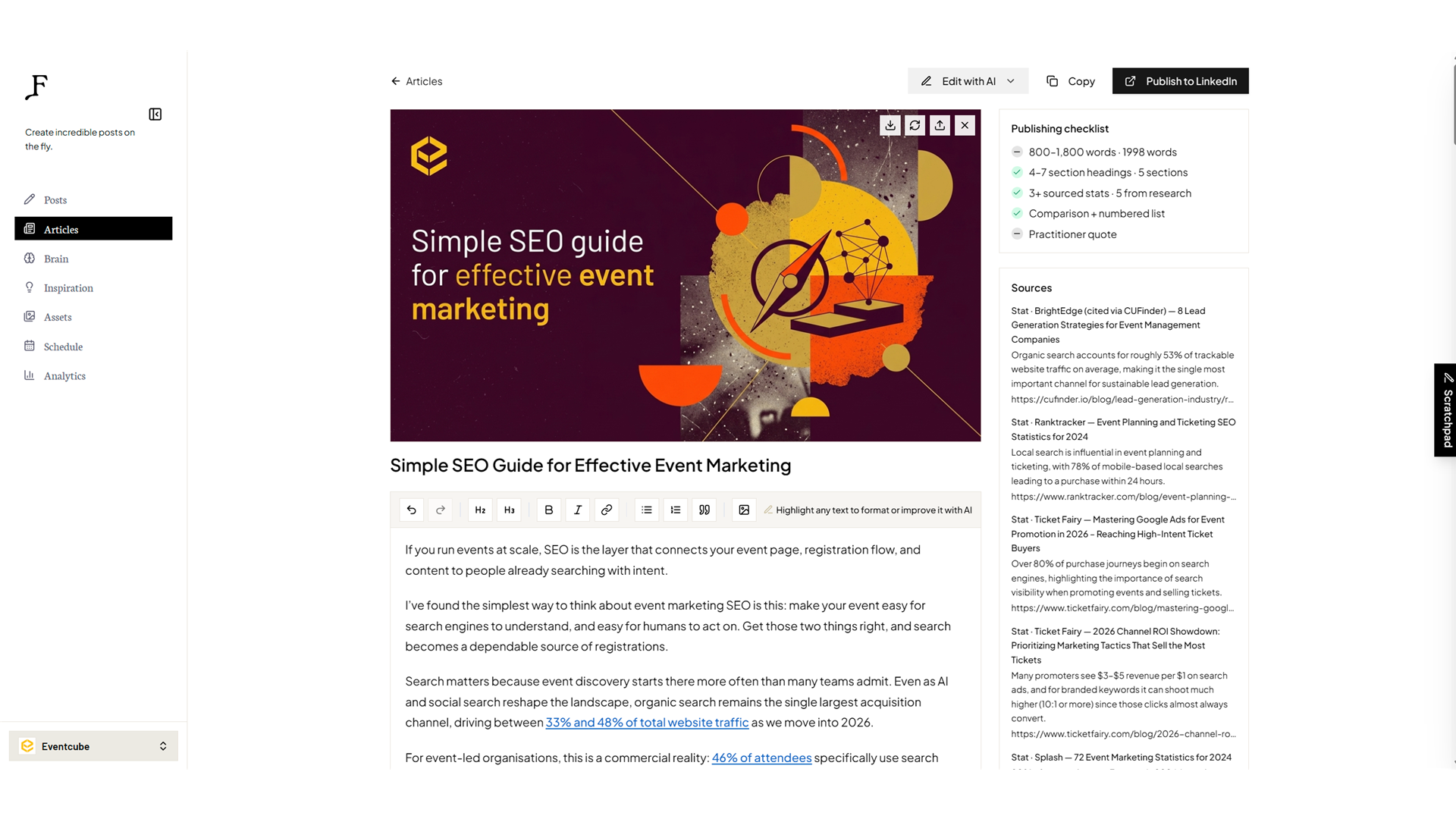
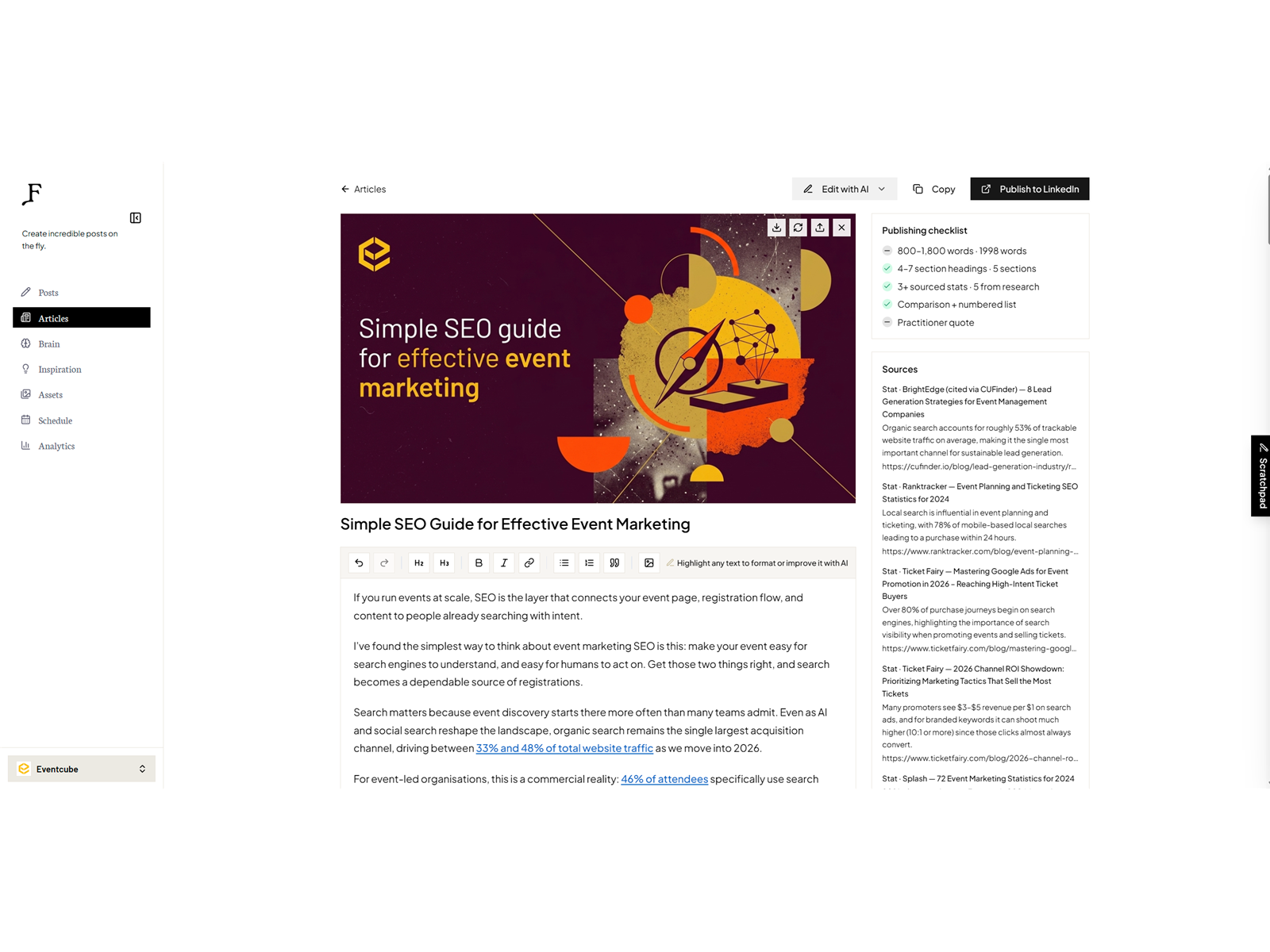
- Article editor screenshot, widescreen
PNG, 1920 x 1080, 889 KB
- Article editor screenshot, 4:3
PNG, 1600 x 1200, 645 KB
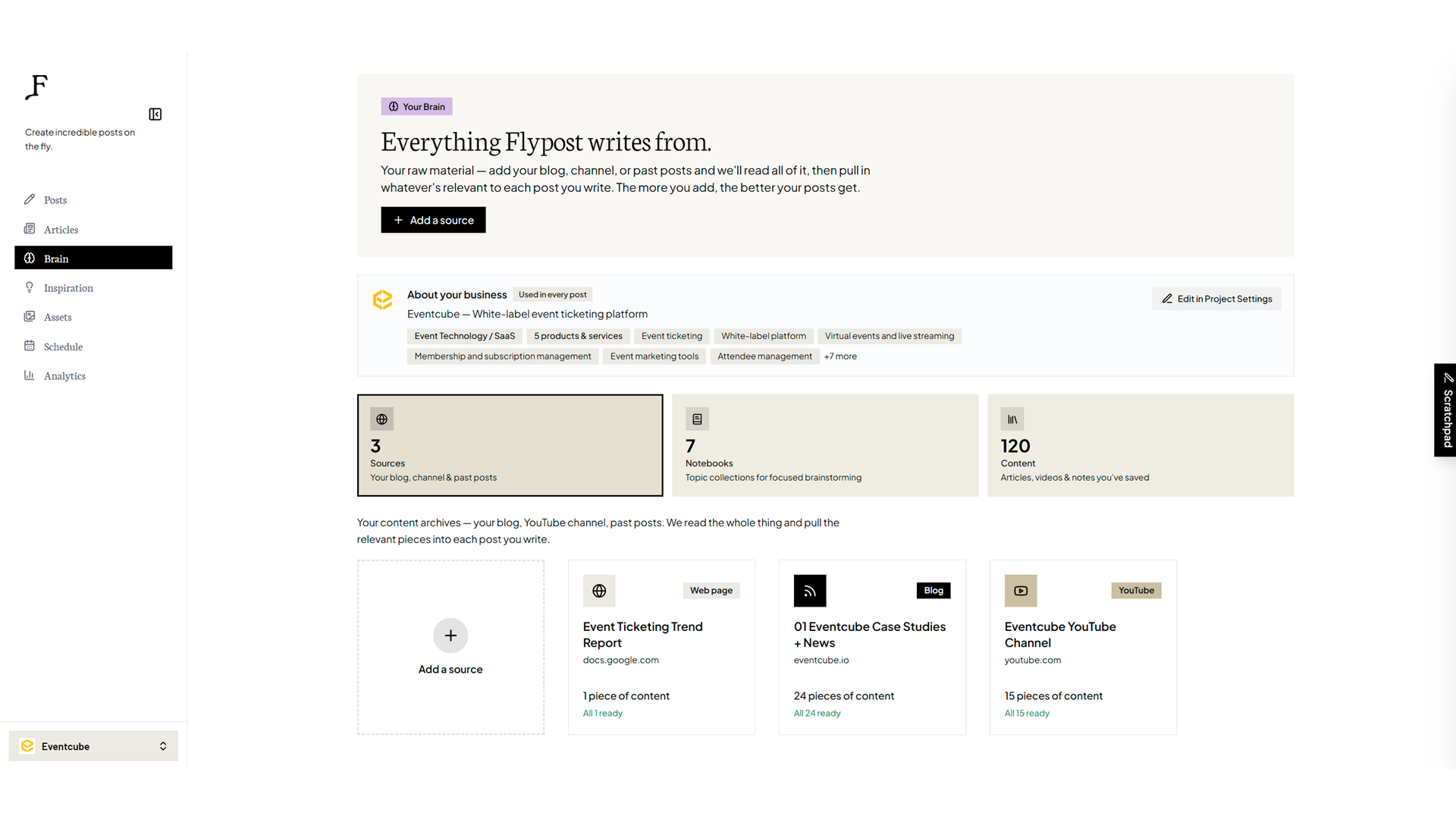
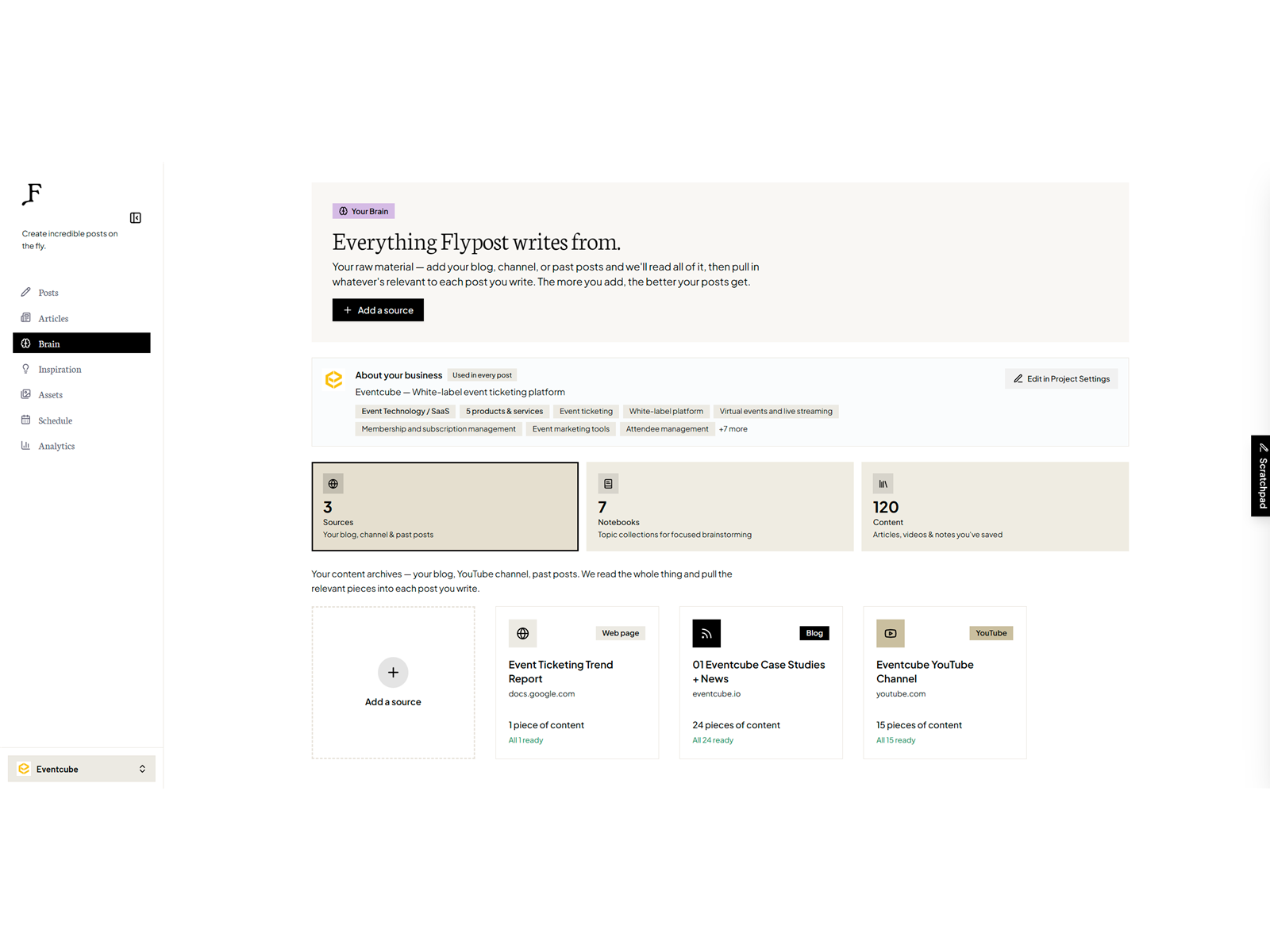
- Brain (source material) screenshot, widescreen
PNG, 1920 x 1080, 279 KB
- Brain (source material) screenshot, 4:3
PNG, 1600 x 1200, 222 KB
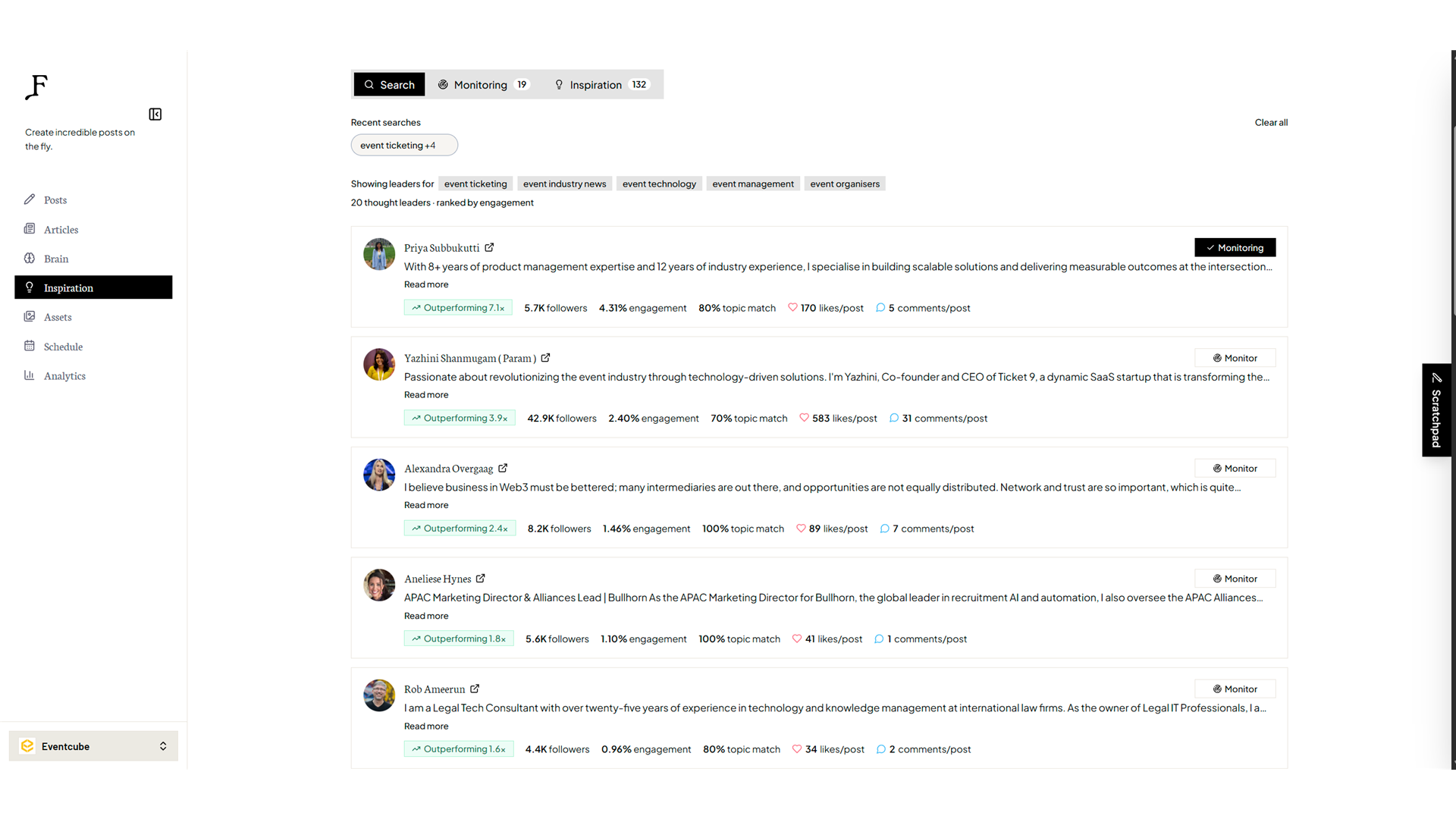
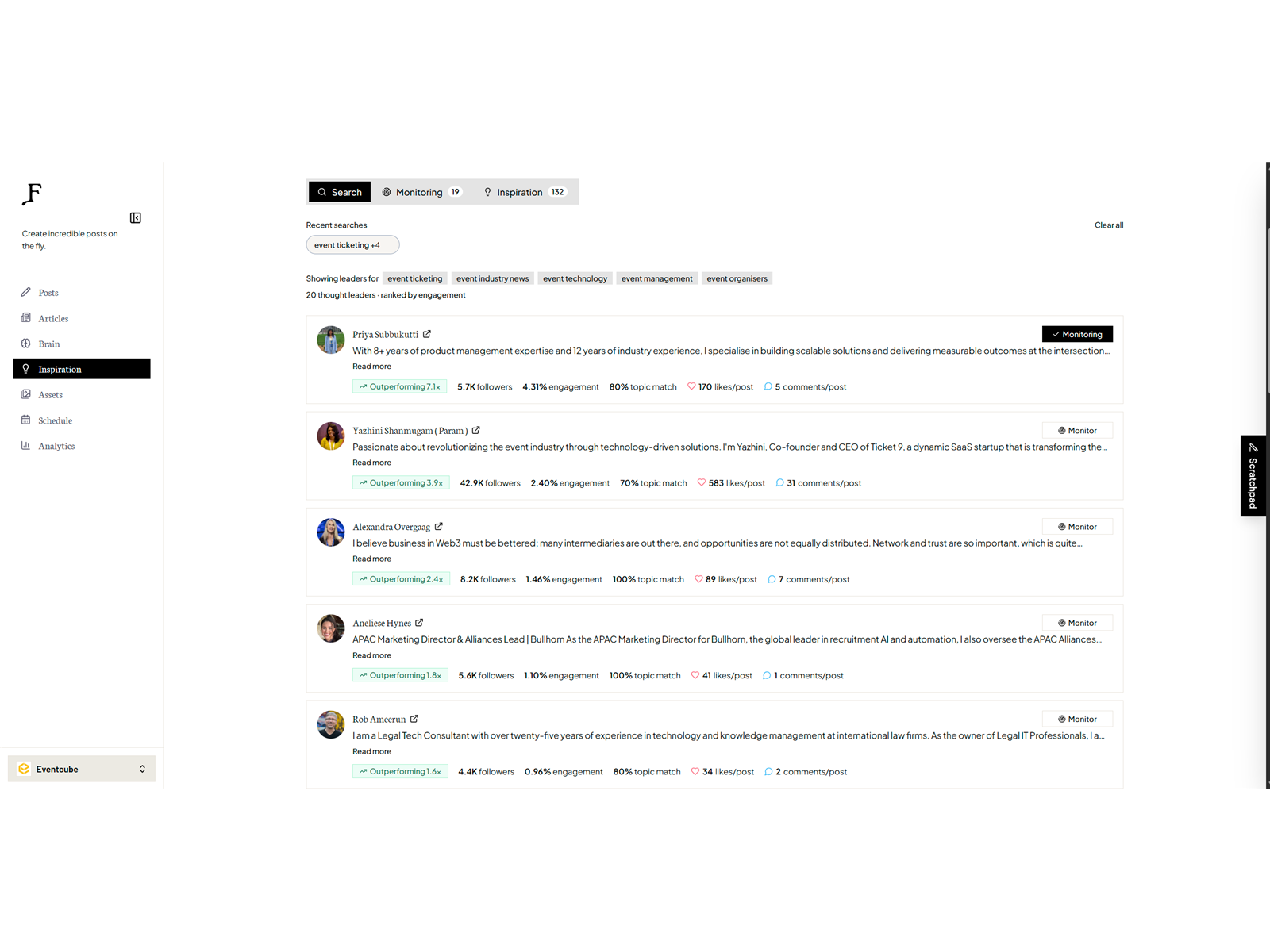
- Inspiration feed screenshot, widescreen
PNG, 1920 x 1080, 367 KB
- Inspiration feed screenshot, 4:3
PNG, 1600 x 1200, 285 KB
Media contact
Sam Cassman, founder, Flypost
Available for interview.
- Email: [email protected]
- Phone: available to journalists on request
About Flypost
Flypost is a LinkedIn content studio that turns a company's own material (posts, transcripts, case studies) into LinkedIn posts, carousels and articles. flypost.io
Read the full study: method, limits and charts